
Glass bead blasting
Glass bead blasting gives the surface an even, matt appearance and removes scale, oxide skin and weld discolouration.
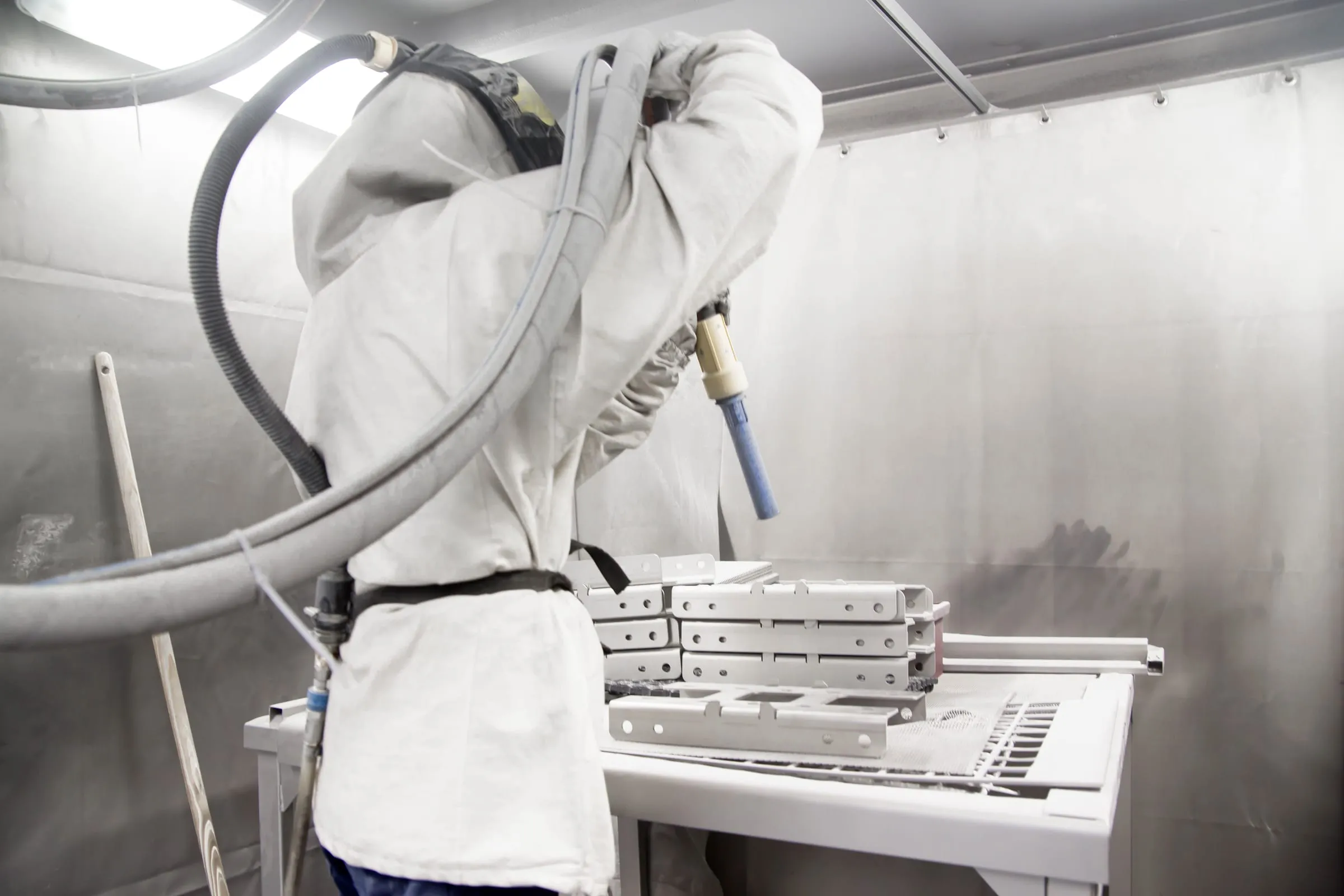
How it works
Round glass beads are blown against the surface under pressure. Because the beads are round they do not grind but lightly peen the surface; the result is even and almost no material is removed.
Where it fits
It is used as a finishing operation, and to even out surface differences created during cutting, bending and welding. On stainless steel in particular, that is the difference between a part that looks finished and one that does not.
Which materials
Glass bead blasting is used mainly for stainless steel and aluminium. On stainless steel it removes not only weld discolouration but the oxide skin as well, which restores the material’s corrosion resistance; there it is not a matter of appearance alone.
Frequently asked questions
Why is stainless steel glass bead blasted?
On stainless steel, glass bead blasting removes not only weld discolouration but also the oxide layer, which restores the material's corrosion resistance. For stainless steel it is therefore not just a matter of appearance, but of how the material performs.
Does glass bead blasting remove material?
Hardly. The round glass beads do not grind; they lightly compact the surface. The result is an even surface, and practically no material is removed.
Which materials is glass bead blasting used for?
Mainly for stainless steel and aluminium, as a final finish and to remove surface differences created during cutting, bending and welding.
Request
What we need to quote
If something is missing we will ask. If you are not sure yet yourself, we will look at it with you.
- material and thickness
- the quantities involved
- a drawing: DXF, STEP or a dimensioned PDF
- whether the part still needs finishing or assembly