
For whom
The sectors we work for do not all ask the same thing. Below is what weighs heaviest in practice, per sector.
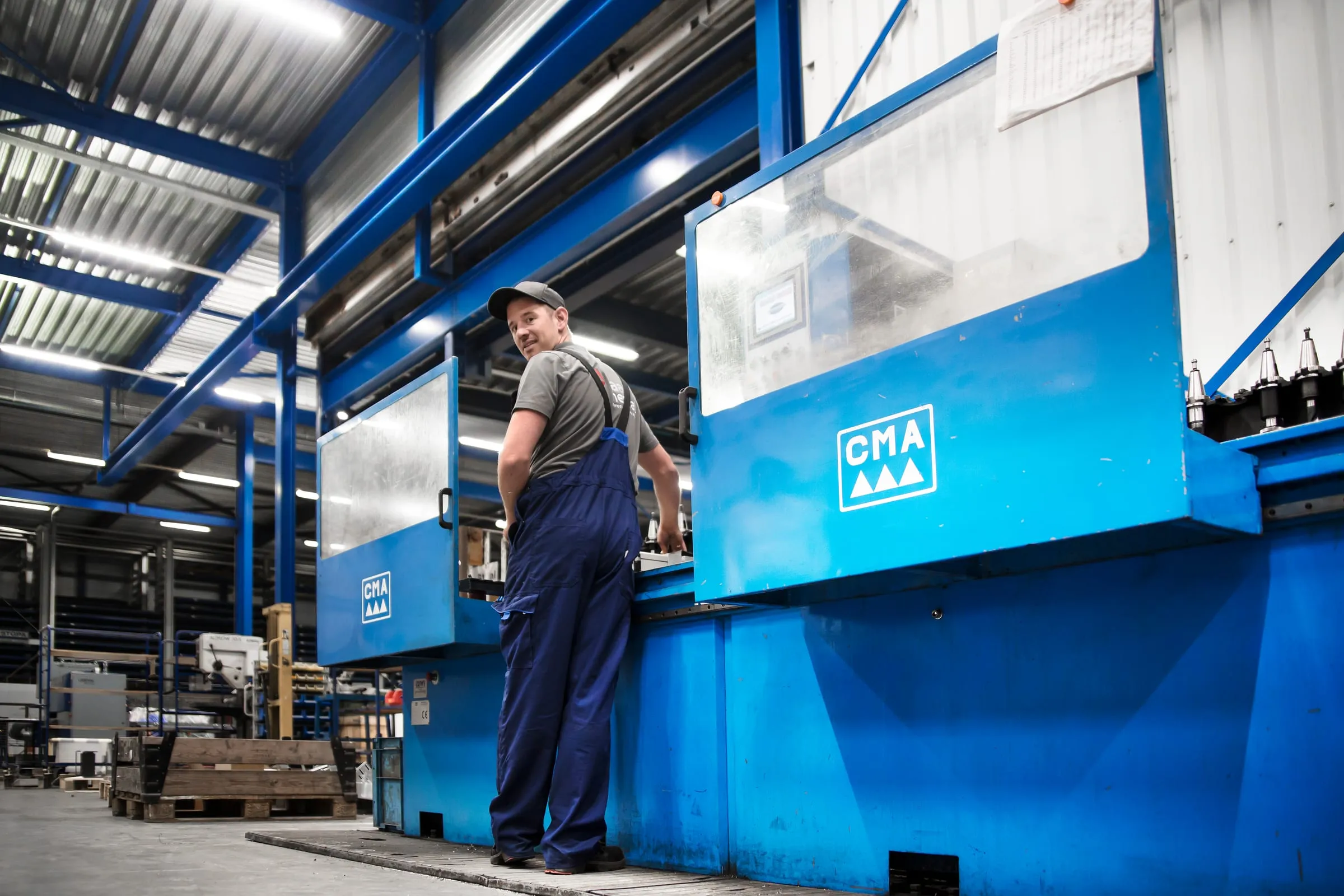
Different requirements, one process
A frame for the transport sector and a part for a food line come out of the same hall, but the requirements sit elsewhere: one on load and repeatability, the other on cleanability and surface. What changes is not the machine but the way we prepare the work.
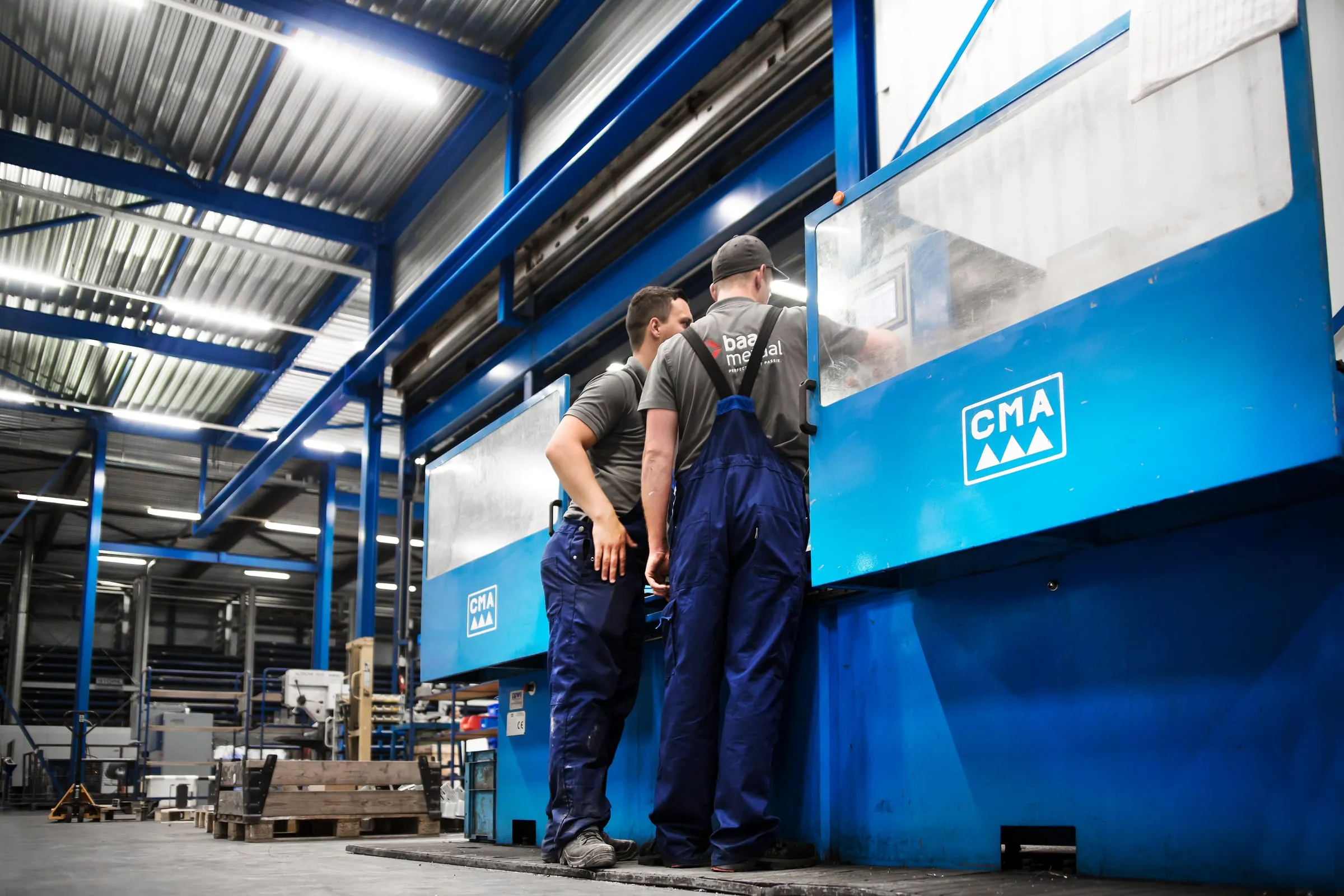
Sector 01
Machine and equipment building
Parts that have to fit into a larger whole, often in varying quantities and with drawings that still change during the build.
What counts most here is that the second and the twentieth part are the same as the first, and that a change to a drawing does not mean setting the process up again. Sheet metal, machining and welding all run through the same preparation with us, so a change only has to land in one place.
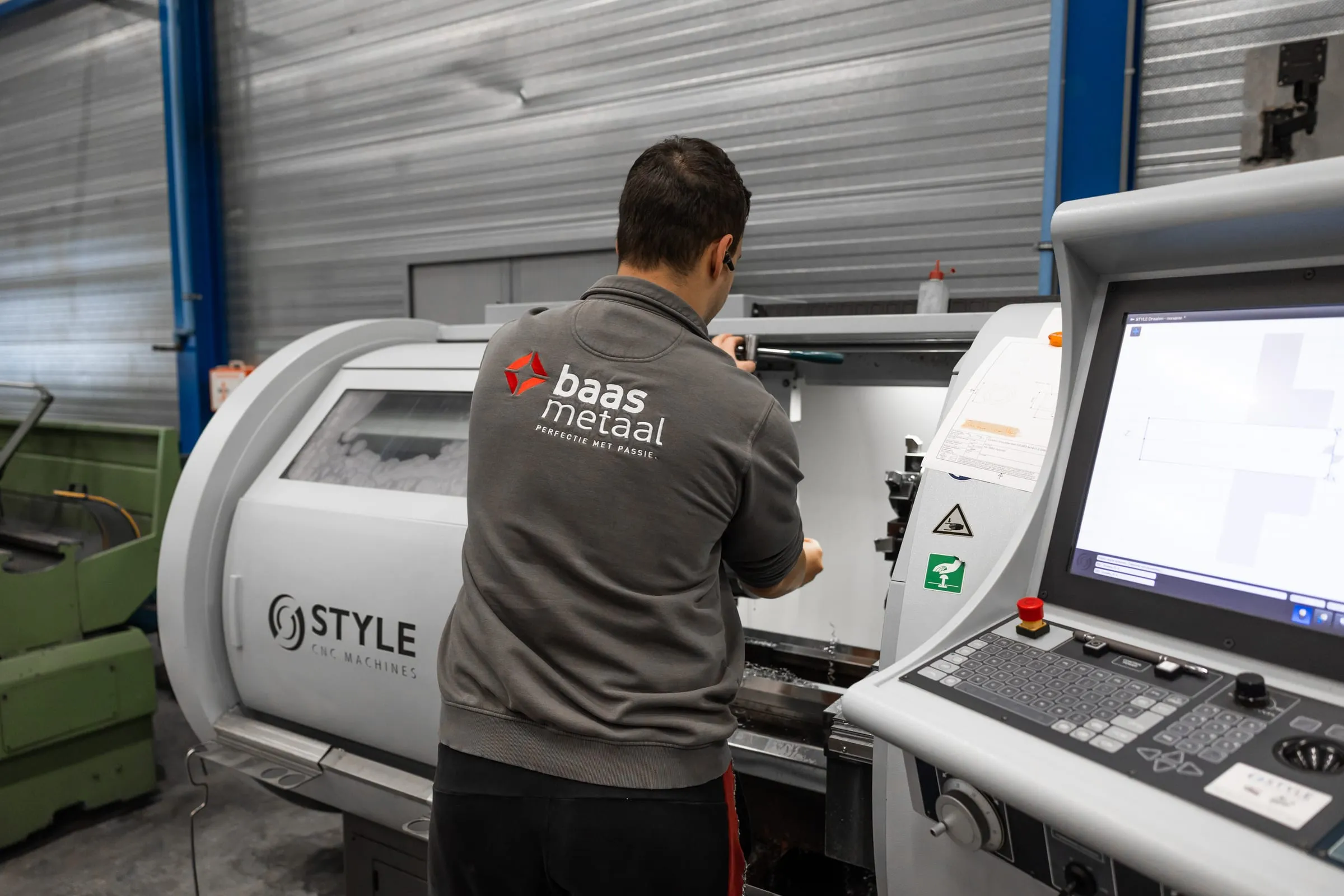
Sector 02
Transport and automotive
Structural parts that carry load and return in series, where the welding has to stay identical from one product to the next.
With repetition the weld is the critical factor: the same angle, the same speed, the same heat input. That is what robot welding is for. Whether it pays off depends on the series and on how often the same weld returns; we work that through with you before a jig is built.
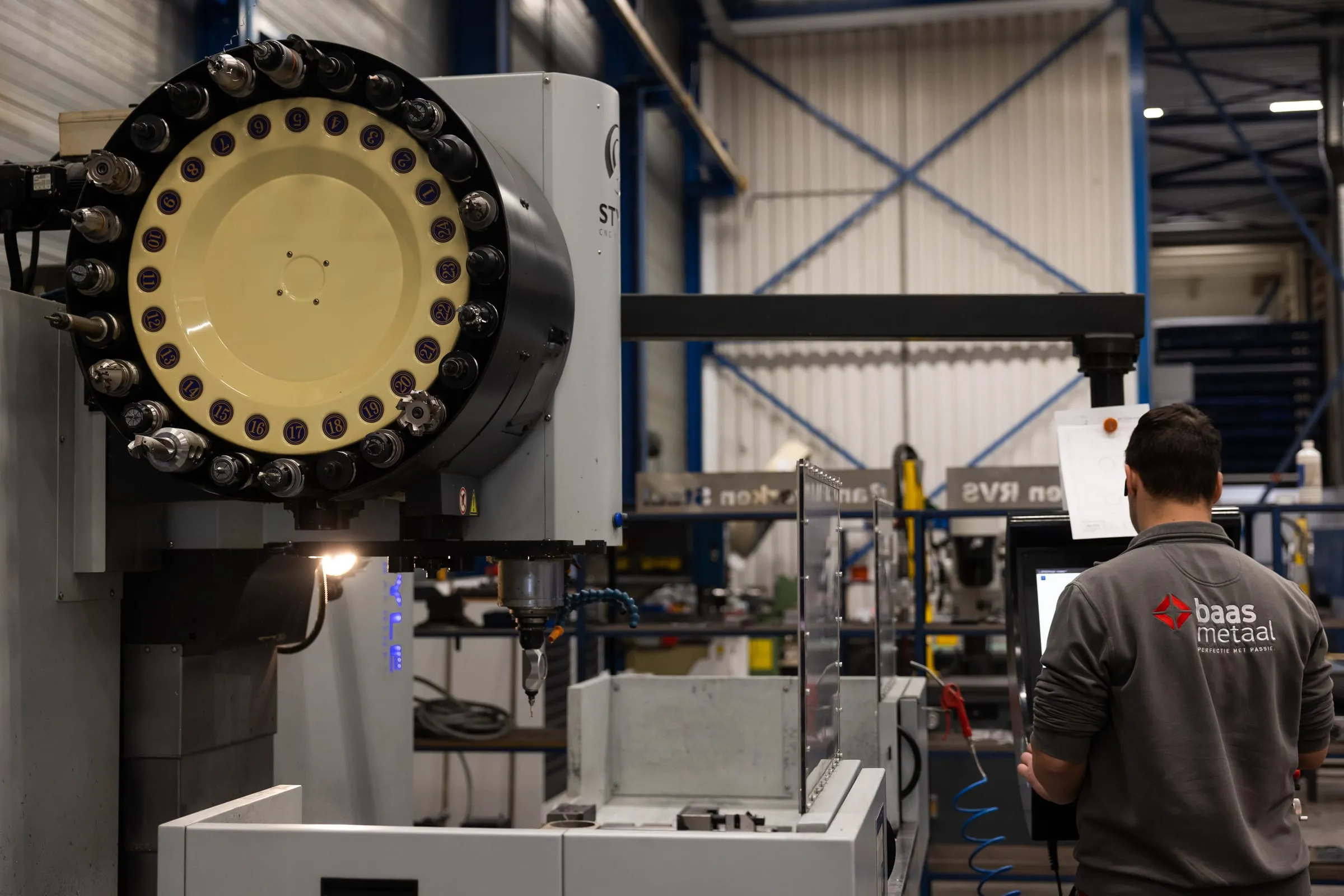
Sector 03
Mechatronics
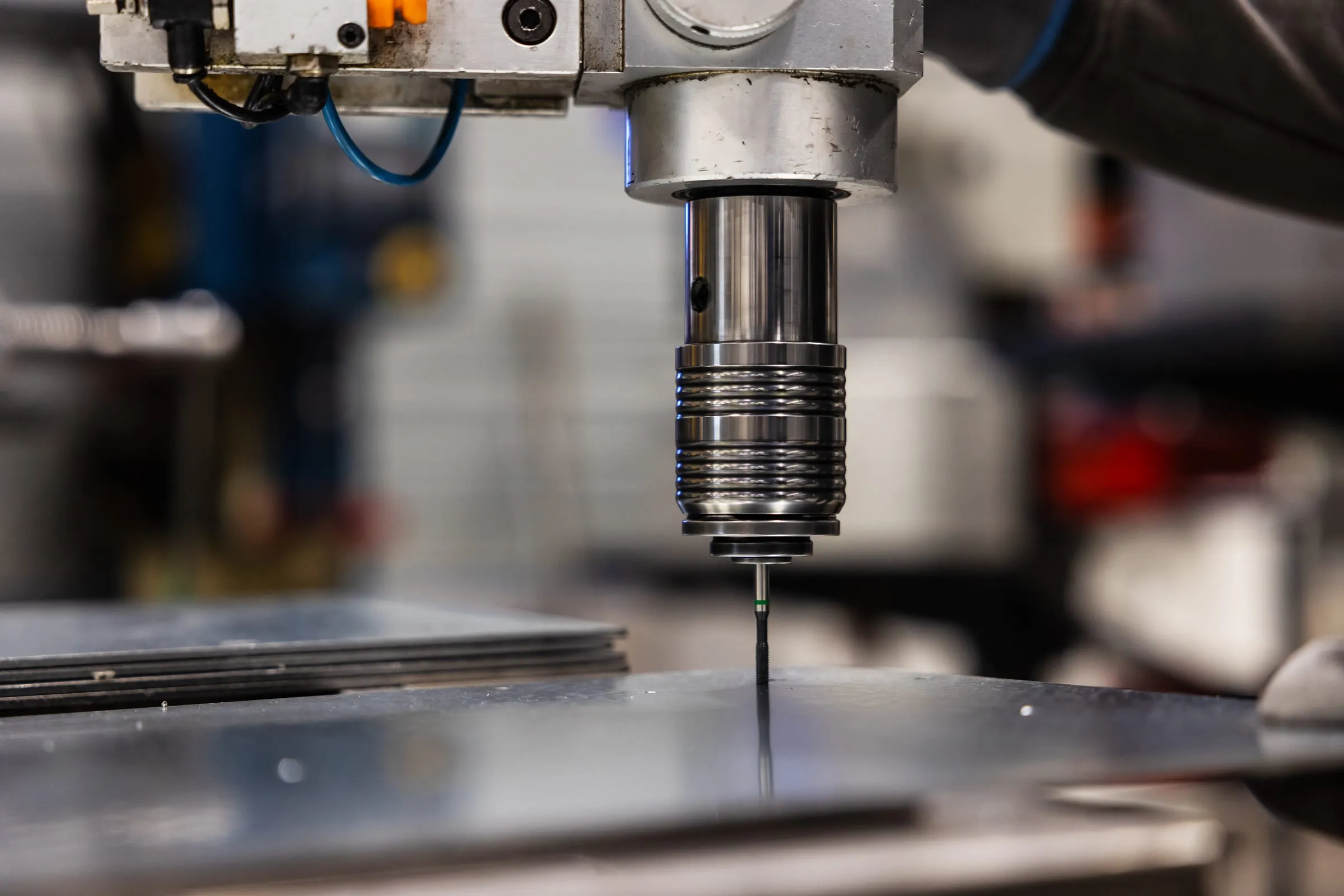
Enclosures and frames in which components, cable looms and cooling all have to find their place, and where the fixing points have to be right to the millimetre.
The shape is rarely the problem here; the positions are. Holes, press-in fasteners and mating faces have to line up with each other, including after bending and welding. So during preparation we look at the order of operations: which hole before bending, which face after.
Sector 04
High-tech
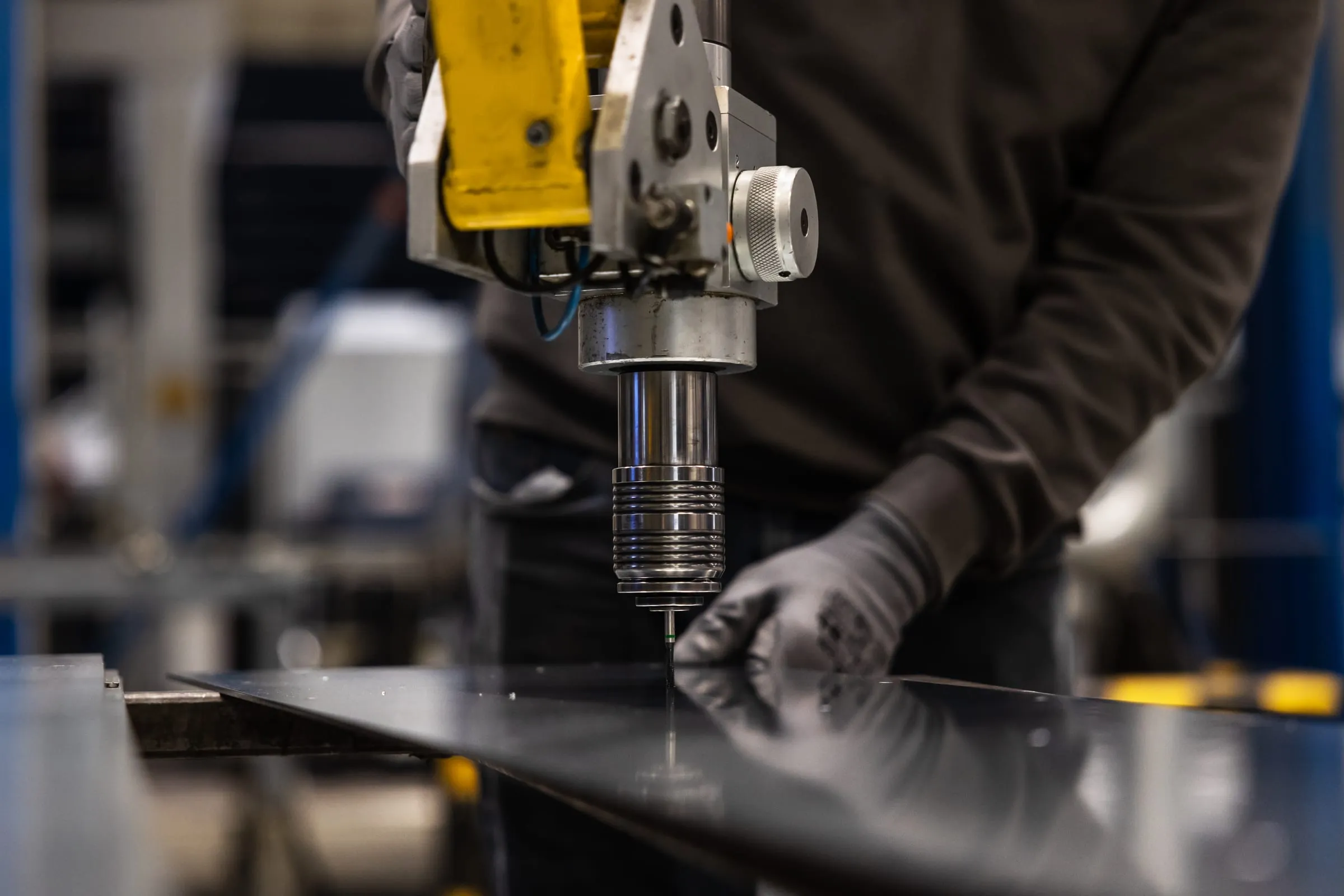
Small quantities with demanding dimensions and finish, and with drawings that are often still developing.
For one-offs and small series the gain is not in machine time but in preparation: thinking through once, properly, how the part is held, in what order it is machined and where the datum sits. That is exactly the conversation we would rather have before the first cut.
Sector 05
Medical
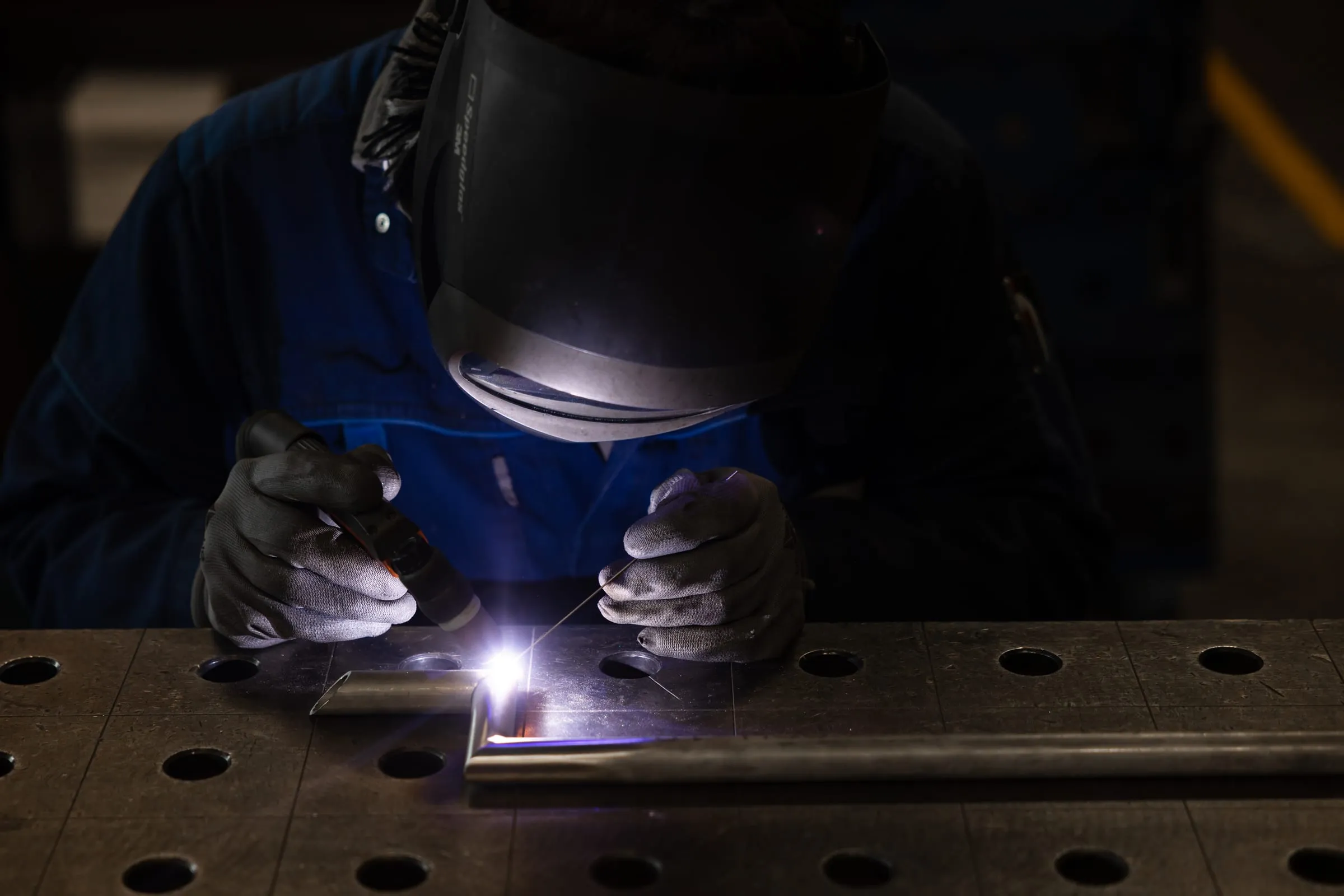
Parts that have to be cleanable: stainless steel, a surface without scale, and transitions where nothing gets left behind.
Cleanability is a design property, not a finishing step. Fully welded seams, radiused transitions and an even surface decide whether a part can be got clean. Glass bead blasting removes weld discolouration and evens out the surface; what else is needed depends on your requirements, which we record up front.
Sector 06
Food
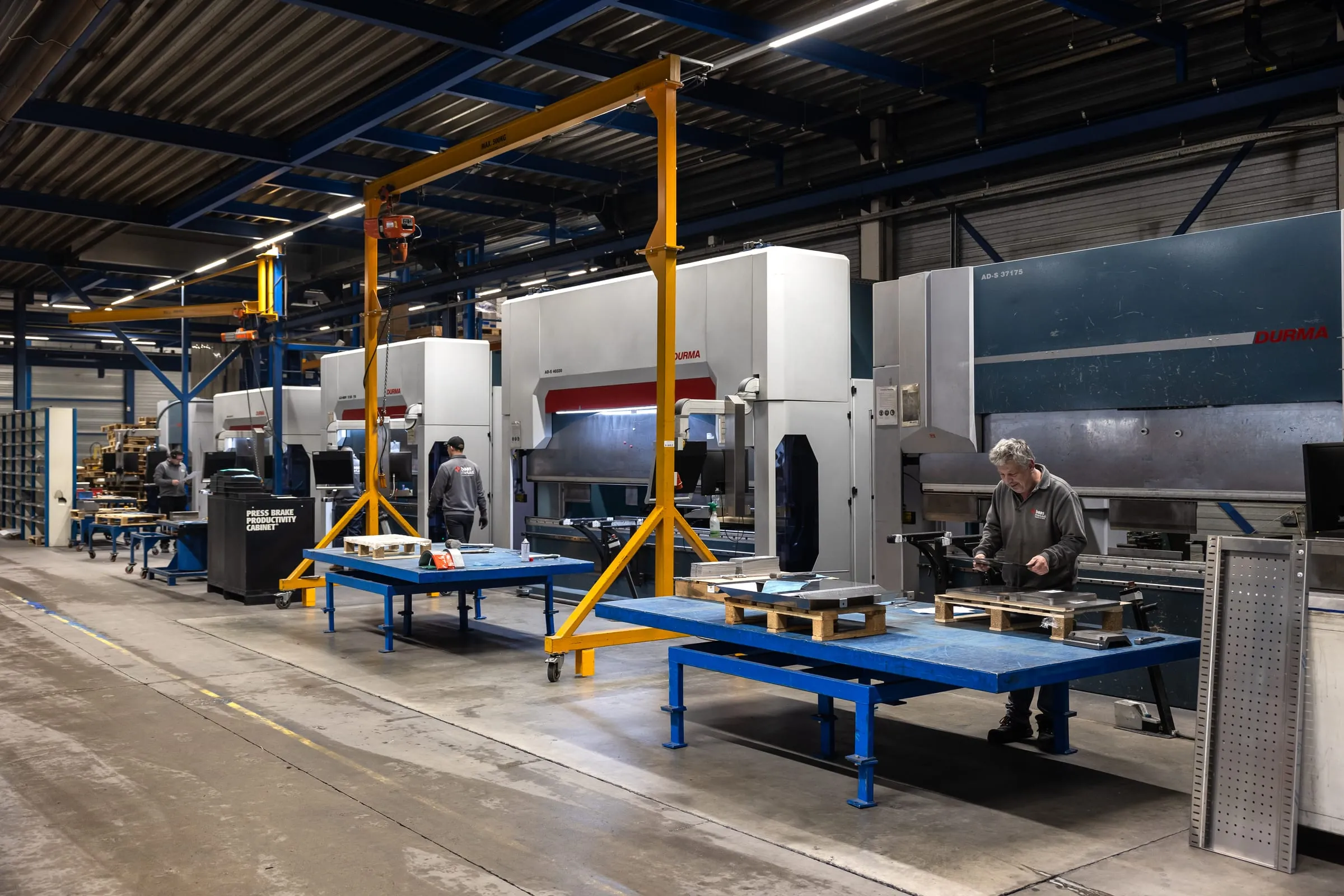
Stainless steel, fully welded seams and a surface that can be cleaned and kept clean, in an environment that is washed down daily.
In food and beverage the detailing makes the difference: where a weld stops, how sharp an internal corner is, whether a section drains. Those are design choices that make cleaning easy or impossible later. We review them during preparation, and record the material choice and surface requirements up front.
Examples of what we make for the food industry: made-to-measure stainless steel worktables and racking, platform stairs, cooling tanks and stainless steel storage tanks. We know the food safety regulations, so the design is aligned with them from the start.
Sector 07
Agriculture
Parts that live outdoors, have to cope with wear and weather, and must not fail in the middle of a season.
Here the heaviest requirement is not accuracy but service life and repairability. Material choice, thickness and the way a weld is loaded decide how long a part lasts. What you usually need is a part that fits and that makes it through another season; we are happy to have that conversation before anything is cut.
Examples of what we make for agriculture: parts for tractors and agricultural machinery, such as self-lubricating bearing bushes, and turned parts and shafts for injectors and fertiliser spreaders.
Request
What we need to quote
If something is missing we will ask. If you are not sure yet yourself, we will look at it with you.
- material and thickness
- the quantities involved
- a drawing: DXF, STEP or a dimensioned PDF
- whether the part still needs finishing or assembly