Techniques
Cutting, bending, welding, machining and finishing – the operations that turn a sheet into a product. They are described separately here, but with us they run through one preparation process.
One chain, not a list of services
The operations below are not separate services you buy individually. They follow one another, and each one determines what the next can still do. So when a request comes in we look at the whole route: which hole before bending, which weld after assembly, where the datum sits.
Where to start
If you know which operation you need, pick it below. If you do not yet, the fastest route is a drawing or a description of the product, and we will look at which route fits.
Frequently asked questions
Why are the operations treated as one chain?
The operations follow one another, and each one determines what the next can still do. So when a request comes in we look at the whole route: which hole before bending, which weld after assembly, where the datum sits. Cutting, bending, welding, machining and finishing run through one preparation process with us.
What if I do not yet know which operation I need?
Then the fastest route is a drawing or a description of the product, and we will look at which route fits. If you do know which operation you need, pick it on this page. The operations are described separately here, but with us they run through one preparation process.
Cutting
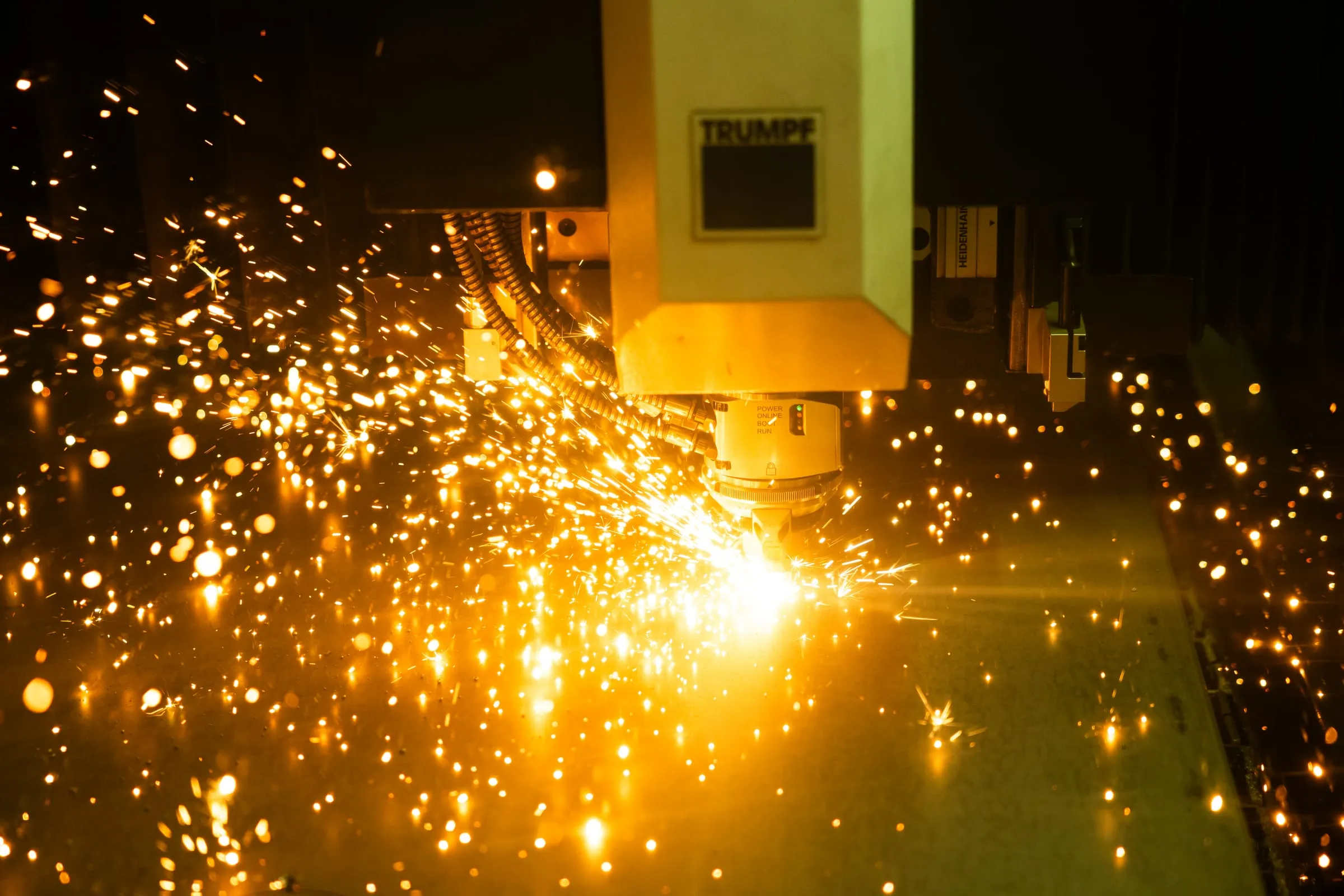
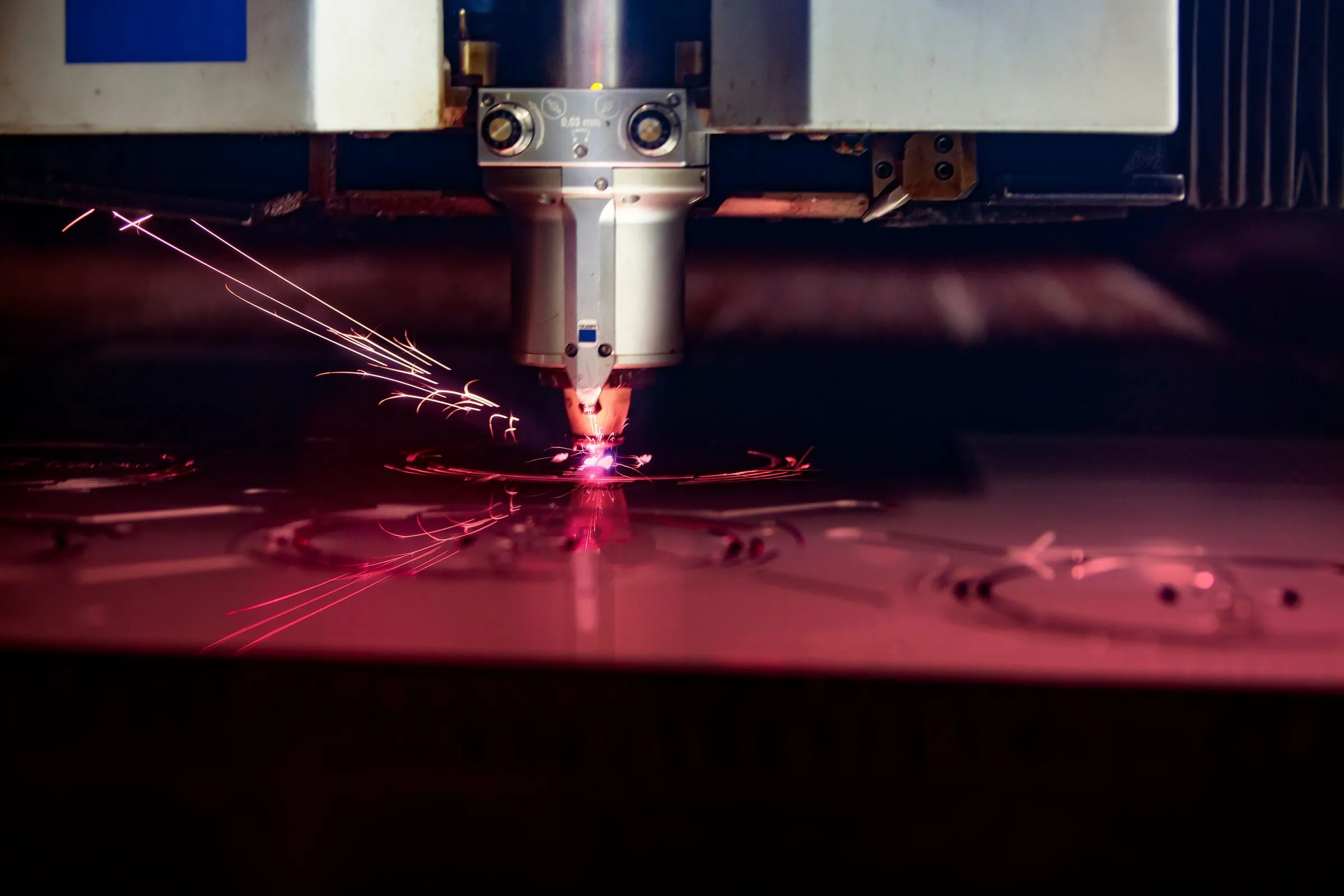
- Laser cuttingLaser cutting cuts sheet material with a focused laser beam. The cut is narrow and heat input stays limited, so parts hold their dimensions and the cut edge usually needs no finishing.Laser cutting head cutting sheet metal, with sparks
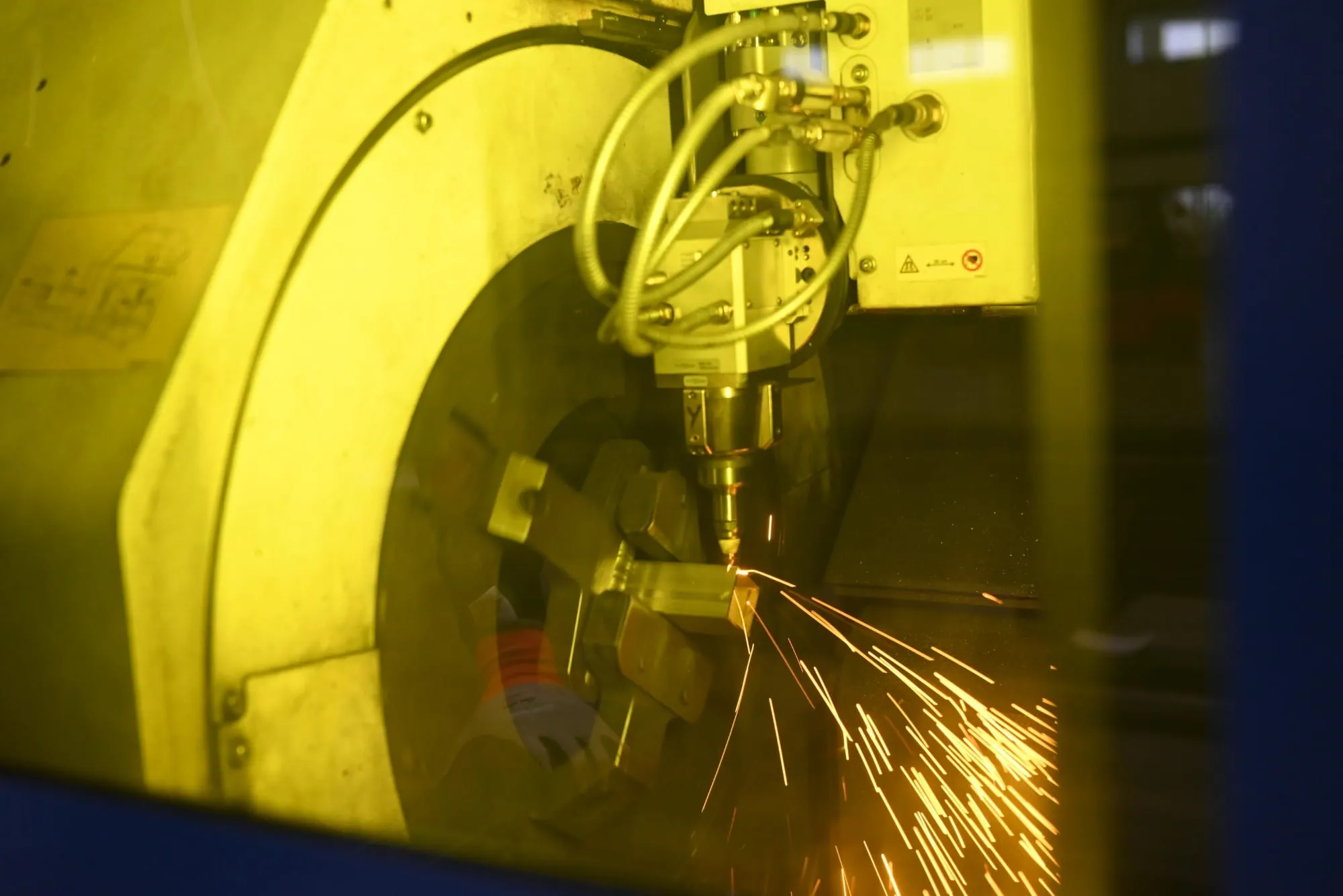
- Tube laser cuttingTube laser cutting cuts sections and tubes to length and puts holes, cut-outs and joining shapes into them in a single set-up.The tube laser's cutting head cuts a profile clamped in the chuck, sparks flying, seen through the yellow safety window
Joining
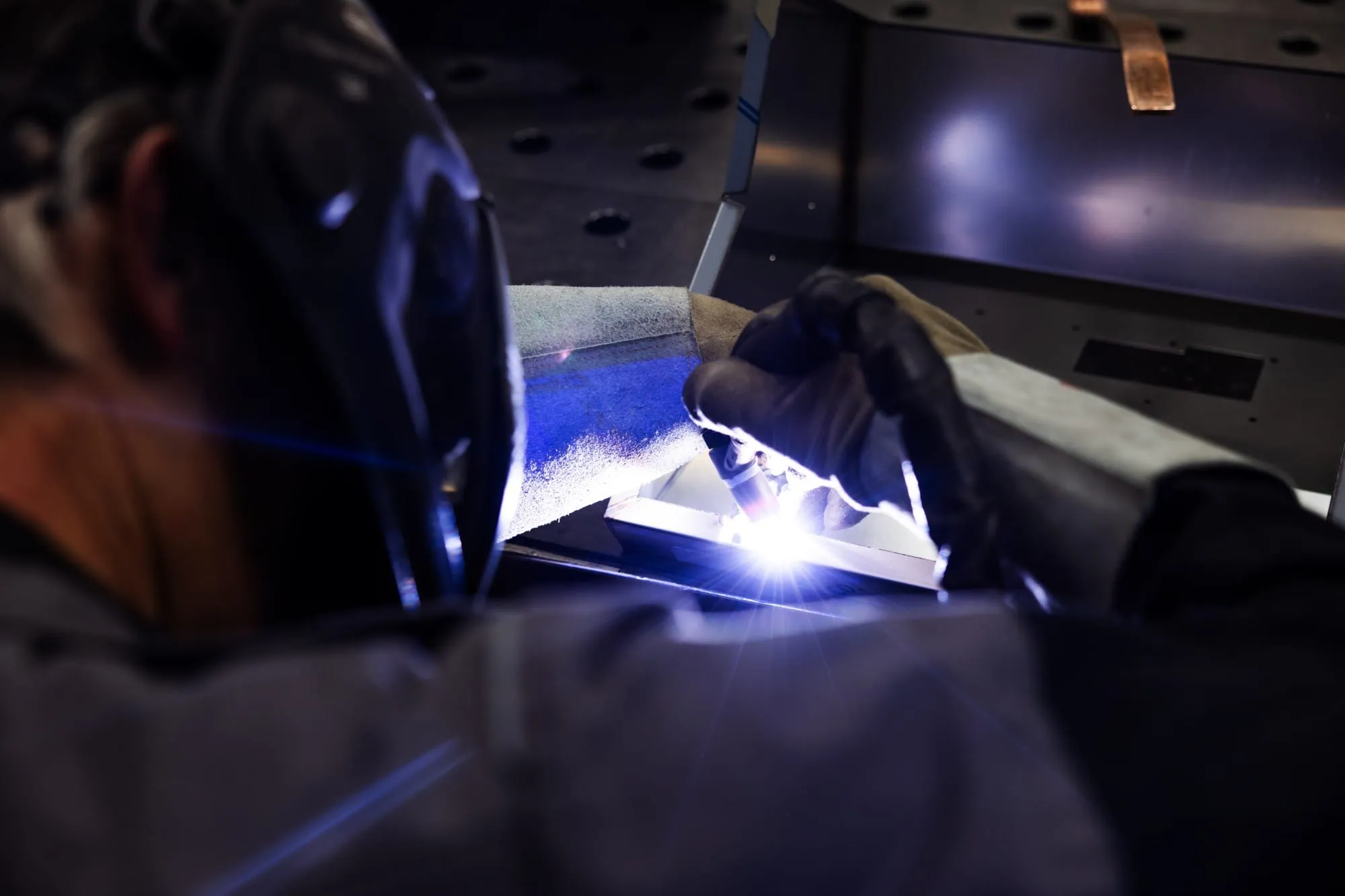
- Laser weldingLaser welding puts the heat into the material very locally. That gives a narrow weld and little distortion, and often a joint that needs hardly any finishing.Welder with the helmet down works a seam by hand on a sheet-metal part in the jig, a bright flare at the point of contact
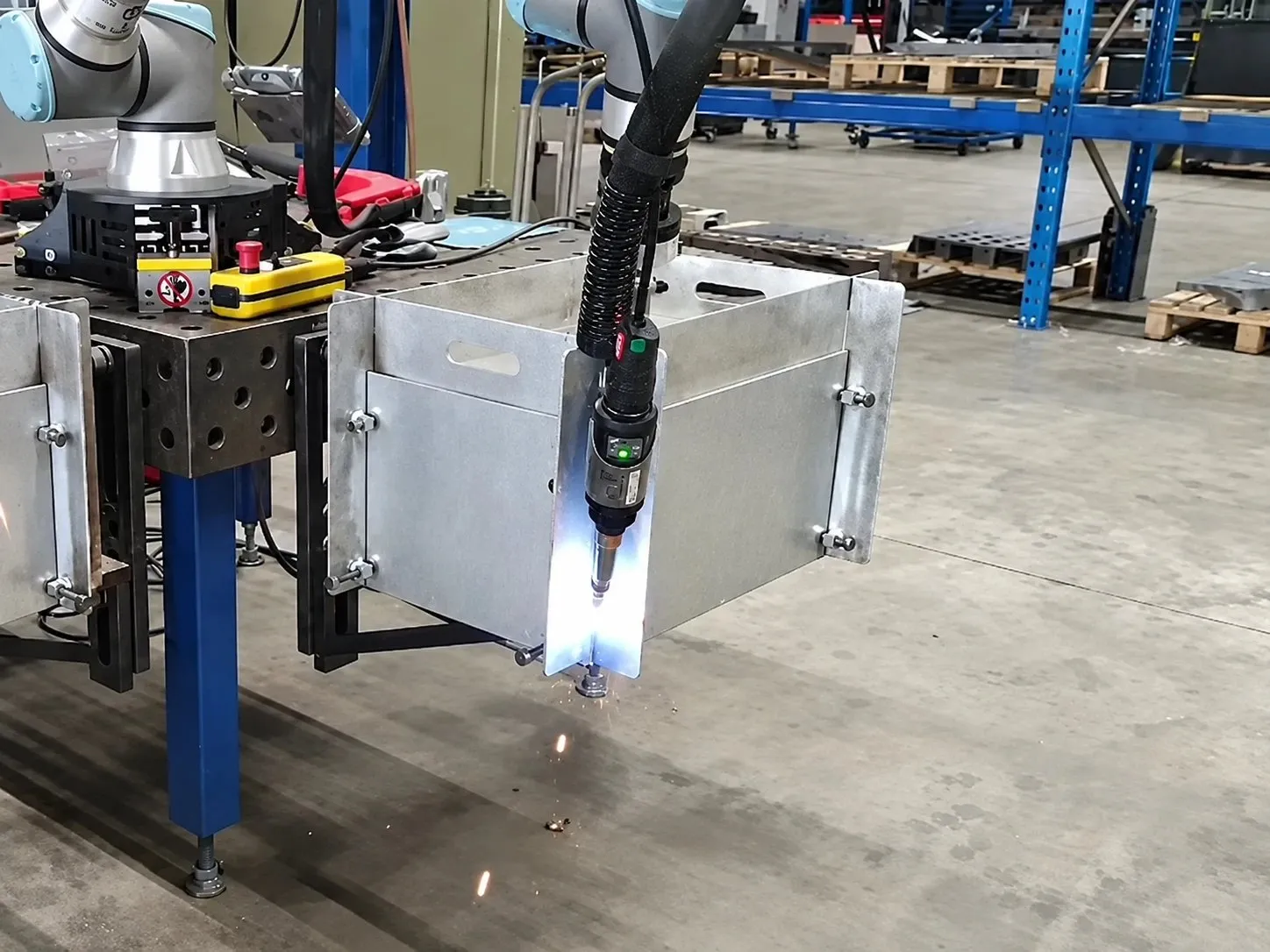
- Robot weldingIn robot welding a programmed robot lays the weld, which gives the same speed, angle and heat input from the first product to the last.Welding cobot welding a vertical seam on a sheet metal box clamped to the welding table, with arc and sparks
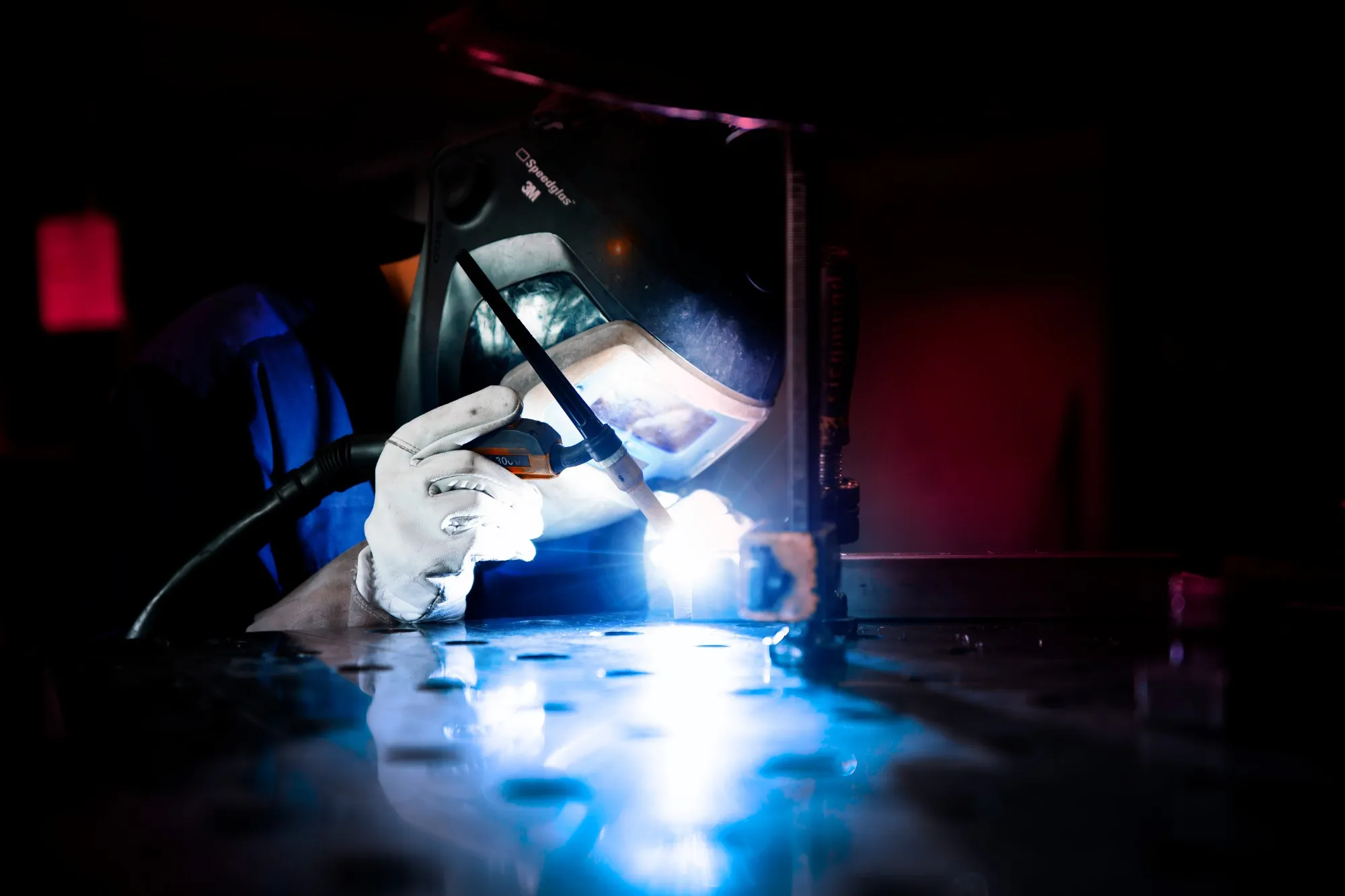
- TIG, MIG and MAG weldingManual welding with TIG, MIG or MAG. Which process fits depends on the material, the sheet thickness and on how the weld has to look in the end.Welder in a welding helmet and white glove welding a seam with the TIG torch on the welding table
- Spot weldingSpot welding joins sheet parts point by point, without filler material. It is quick and leaves little to see on the outside.
- Press-in fastenersPressing in fixes nuts, studs and standoffs into sheet metal, without welding and without loose parts at assembly.
Forming
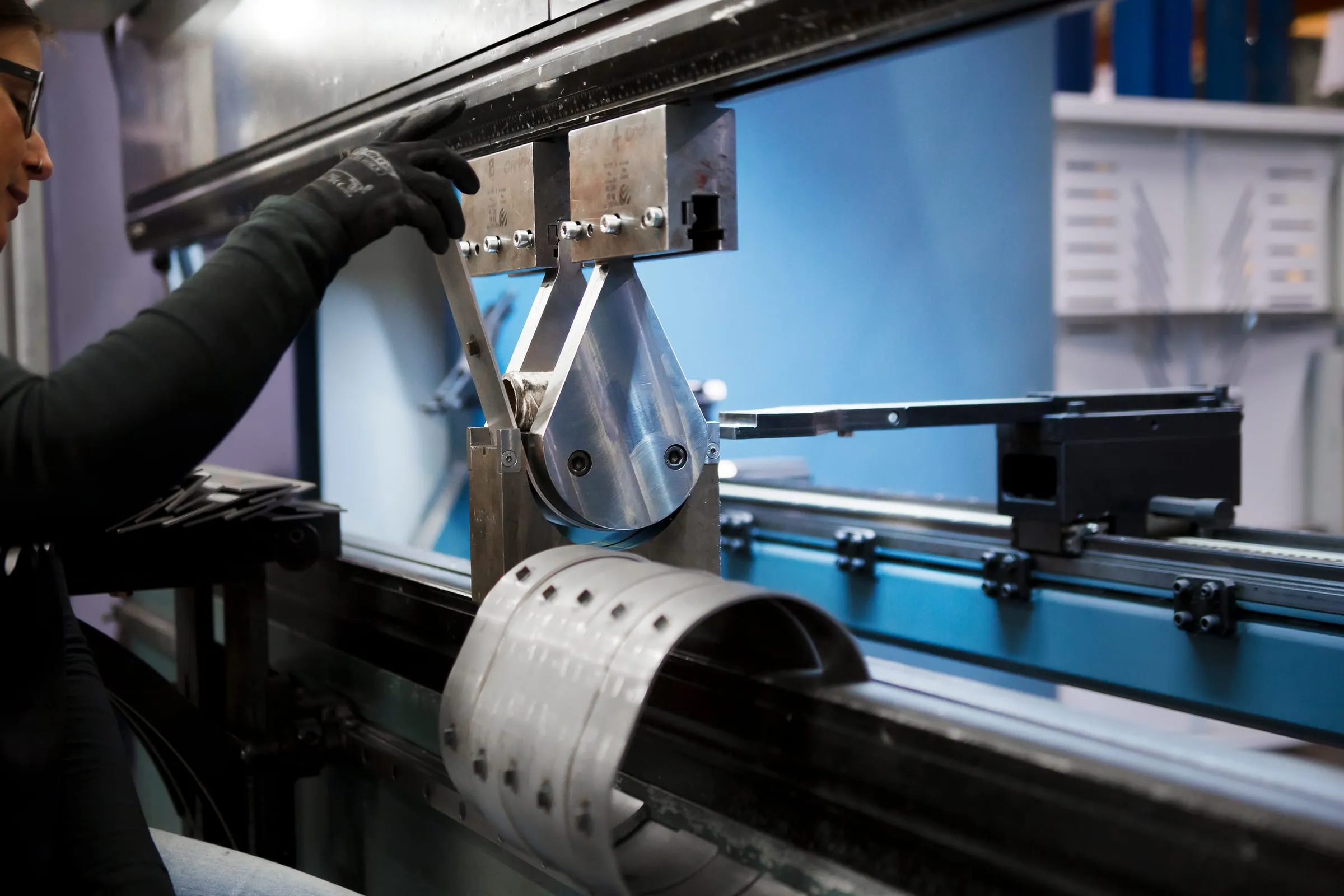
- Sheet metal bendingBending turns flat sheet into the shape the product needs. The bending sequence decides whether a part can be made at all, which is why we look at it during preparation.Sheet metal part being bent on the press brake
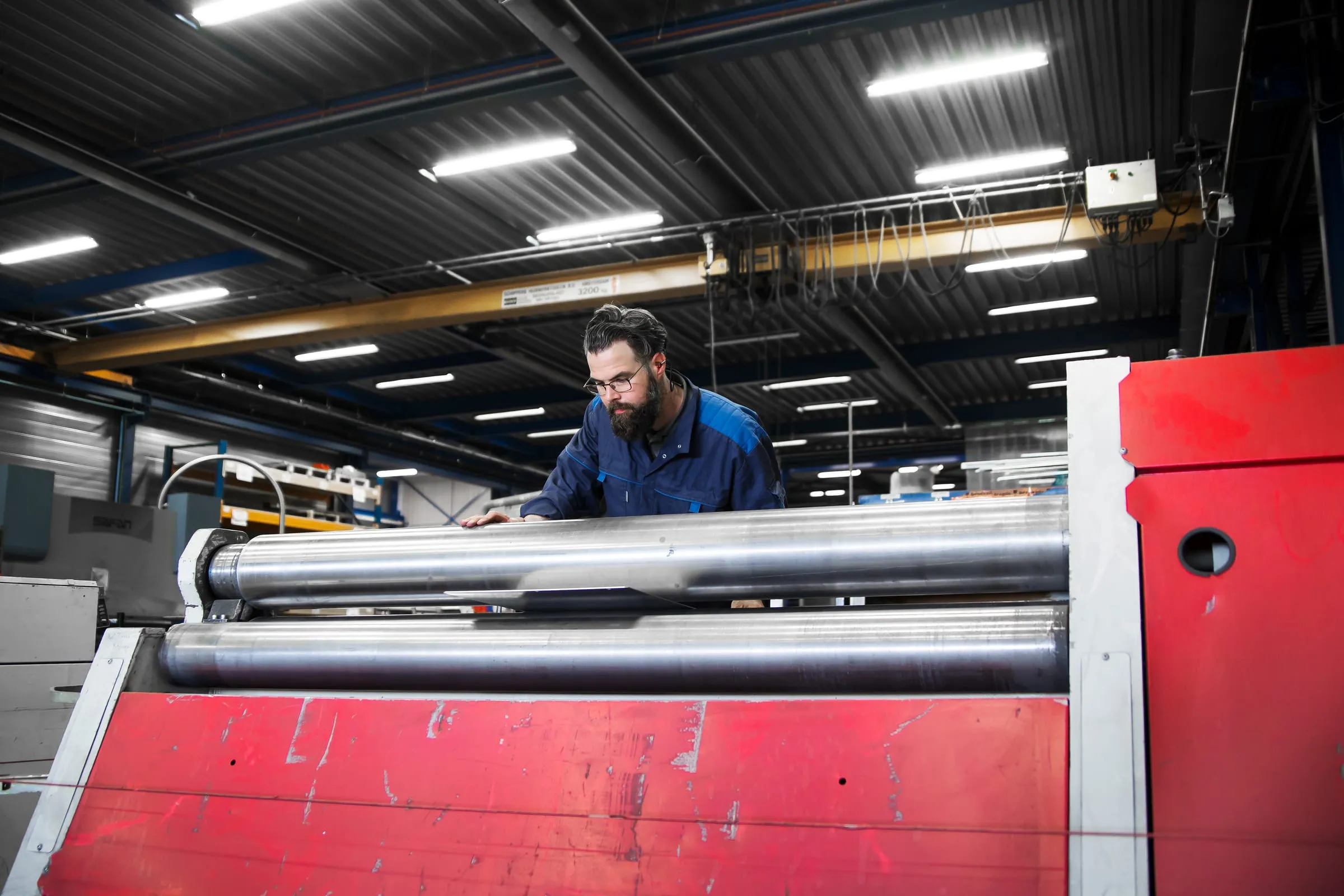
- RollingRolling bends sheet into a curve: a cylinder, a cone or a segment of one. Unlike bending, the curvature continues across the whole sheet.A Baas Metaal colleague at the plate rolling machine
Machining
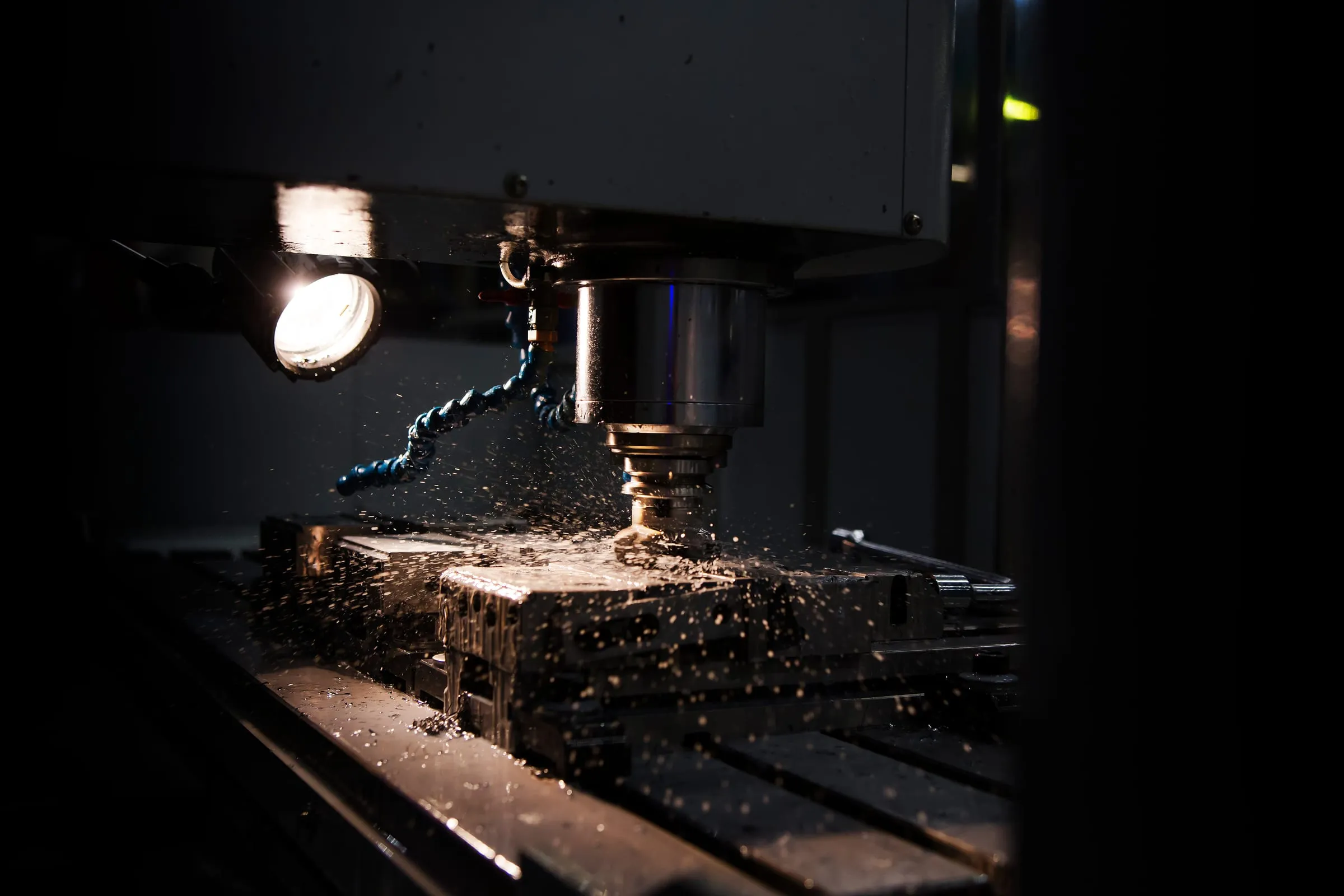
- CNC millingMilling removes material with a rotating tool. It is the operation for faces, slots, pockets and holes that need to be more accurate than cutting or drilling allows.Milling cutter in the CNC milling machine with flying chips
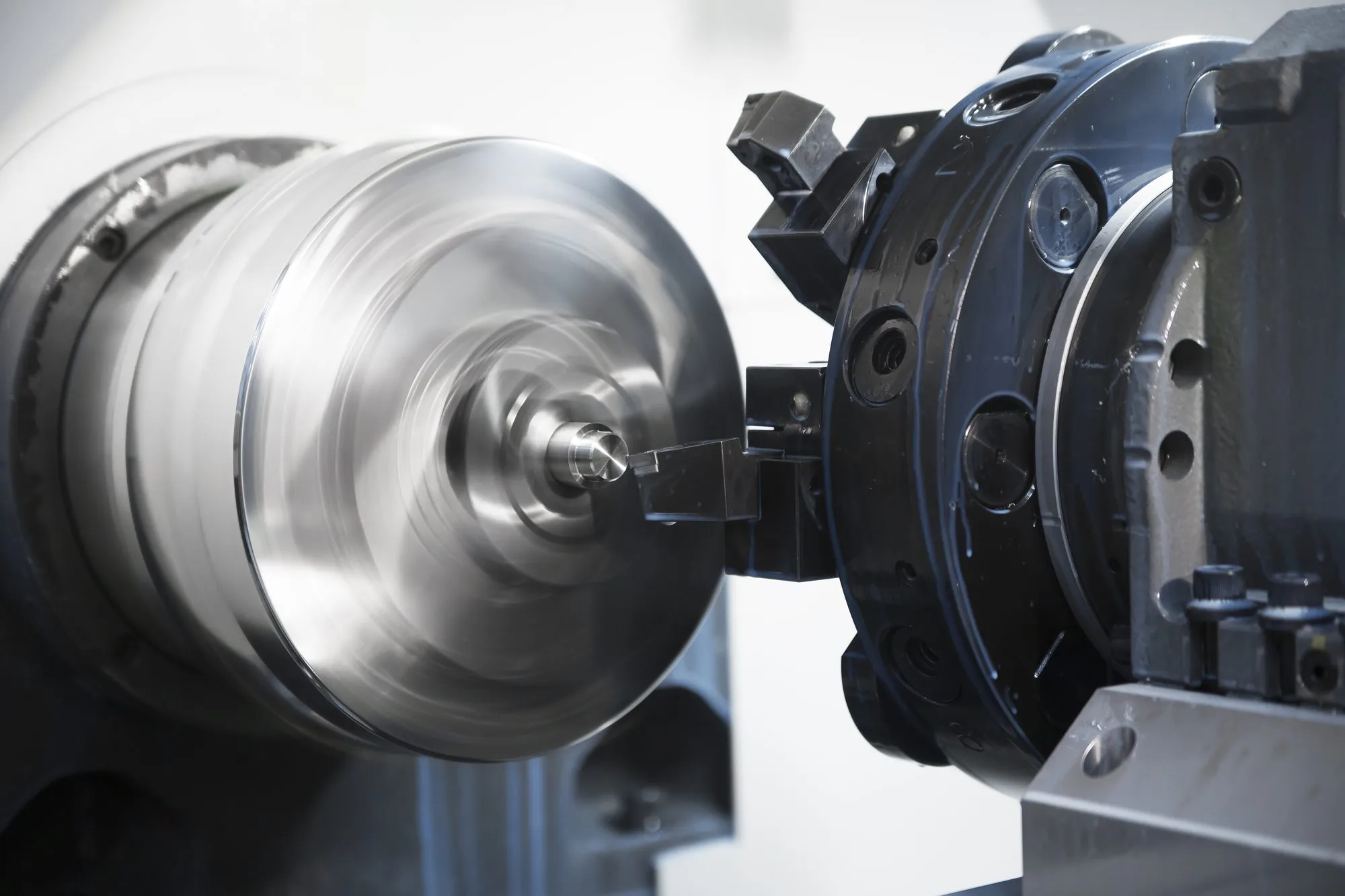
- CNC turningTurning produces round shapes: shafts, bushings, flanges and transitions. The workpiece rotates, the tool stays put.Workpiece spinning in the chuck of a CNC lathe, with the tool from the turret against it
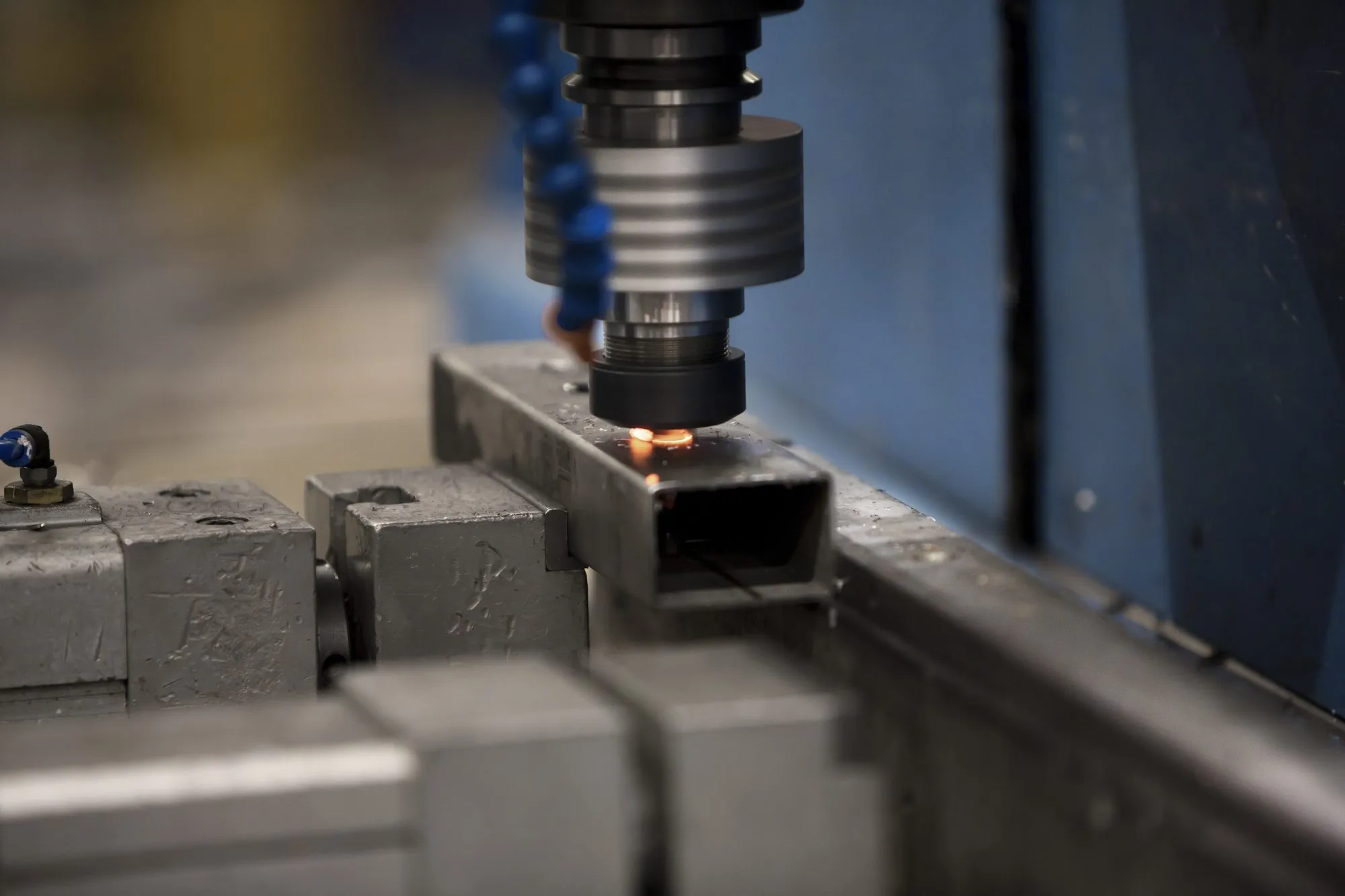
- CNC flow drillingFlow drilling makes a hole in sheet or tube without removing material. The material is displaced and forms a collar, which can then be threaded.A rotating tool in a finned holder drills a hole in a clamped box section; the material glows at the point of contact
Finishing
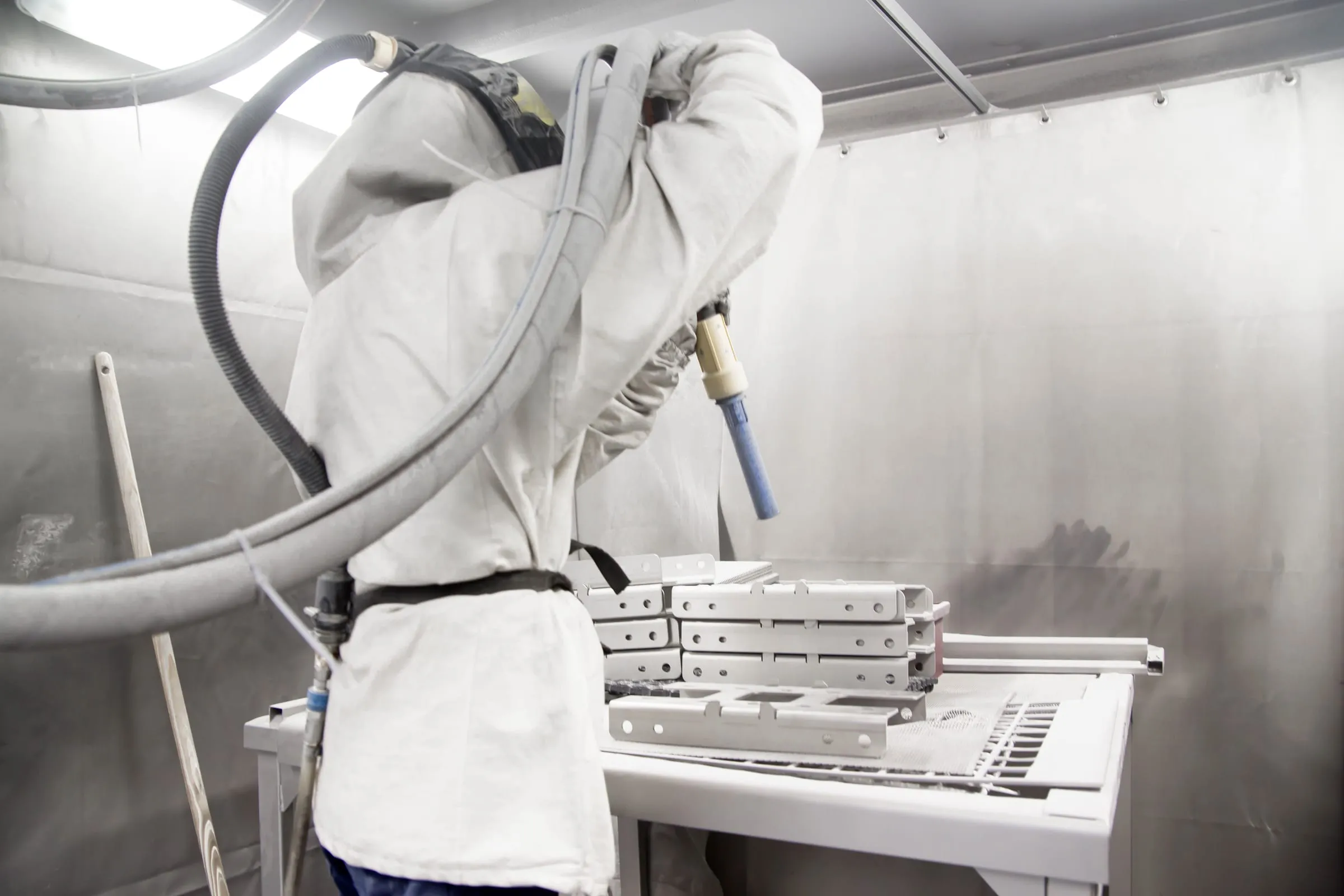
- Glass bead blastingGlass bead blasting gives the surface an even, matt appearance and removes scale, oxide skin and weld discolouration.A colleague blasting parts in the blast cabinet
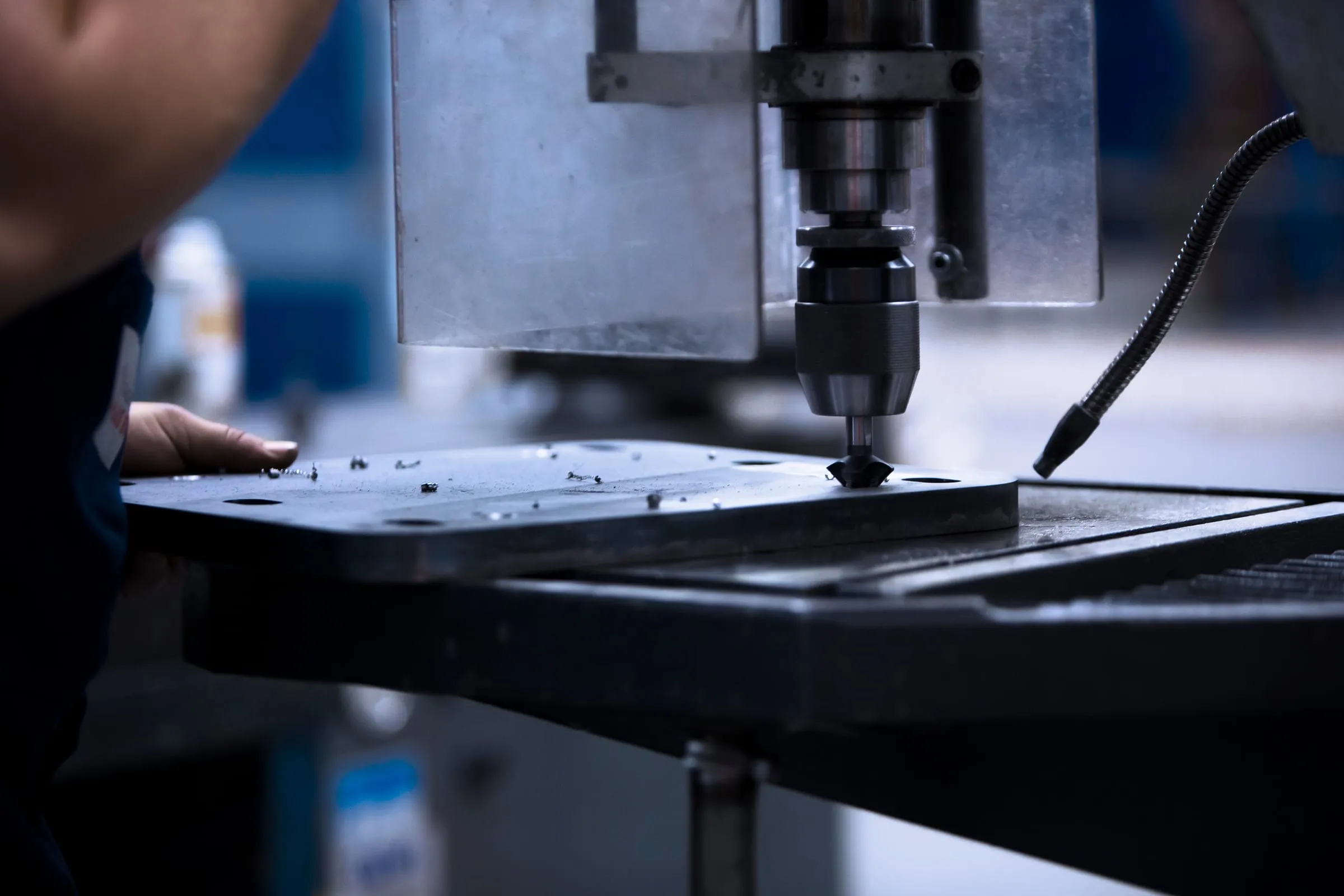
- Other operationsBesides cutting, bending, welding and machining there are operations that finish a product or make it ready for use.Countersinking holes in a plate on the pillar drill