
CNC turning
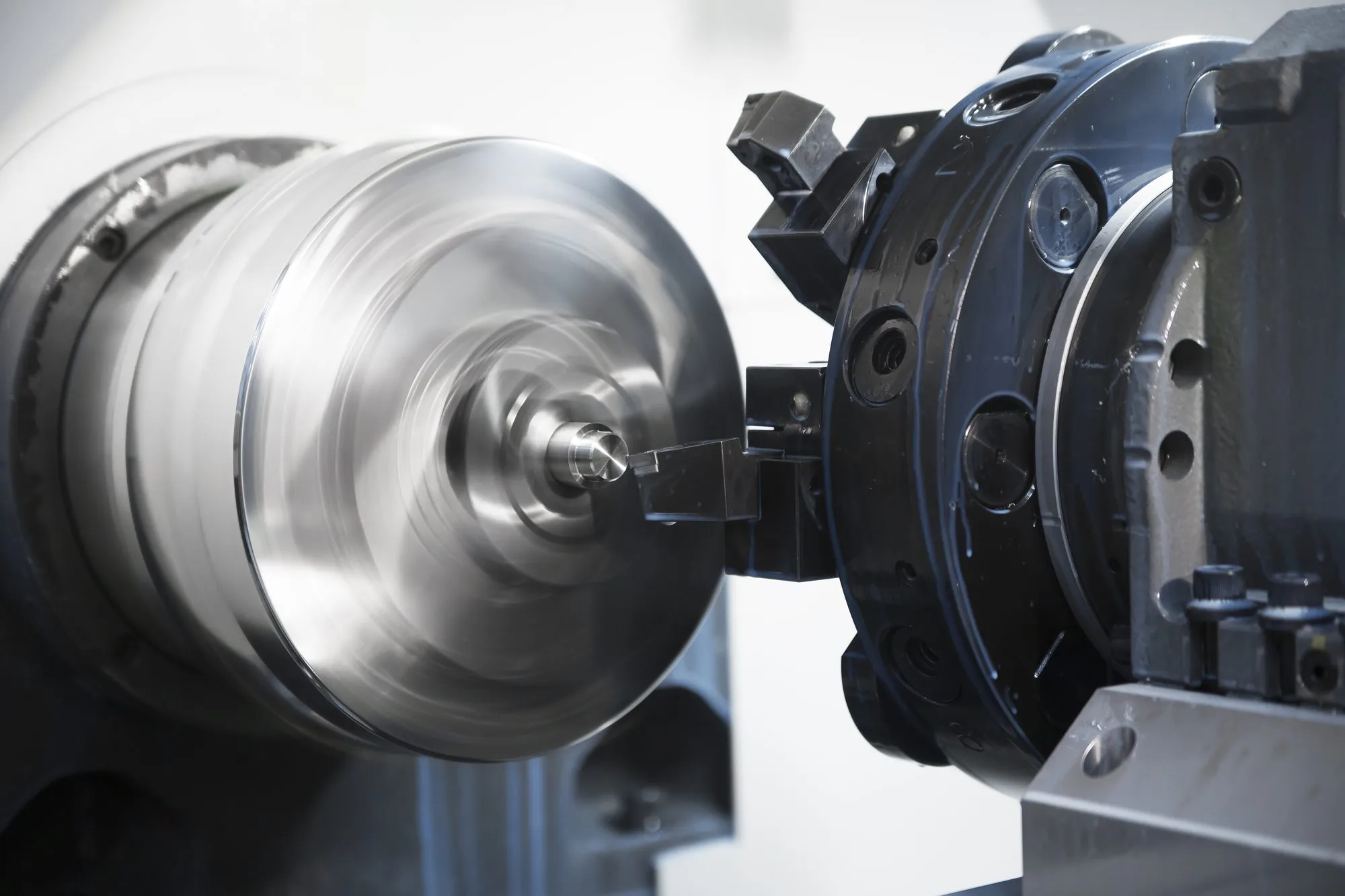
Turning produces round shapes: shafts, bushings, flanges and transitions. The workpiece rotates, the tool stays put.
How it works
The material rotates about its own axis and a tool removes material along programmed paths. Outside diameters, bores, chamfers and threads are made in the same set-up and therefore keep their relative positions.
Where it fits
Turned parts often end up in the same assembly as sheet metal: a turned bushing in a bent bracket, a flange on a welded frame. Doing both in one place keeps the coordination between them short.
What we turn with
The lathes move along the X and Z axes and are used for single pieces and small series. The maximum turning diameter and length have not been recorded yet; ask for them if your part sits near a limit.
Frequently asked questions
Which parts are made by CNC turning?
Turning produces round shapes such as shafts, bushings, flanges and transitions. The material rotates about its own axis and a tool removes material along programmed paths. Outside diameters, bores, chamfers and threads are made in the same set-up and therefore keep their relative positions.
Why have turning and sheet metal work done in one place?
Turned parts often end up in the same assembly as sheet metal, for example a turned bushing in a bent bracket or a flange on a welded frame. Doing both in one place keeps the coordination between them short.
What quantities and sizes can you turn?
The lathes are used for single pieces and small series and move along the X and Z axes. If your part is large or long, check with us beforehand whether it fits the range of the lathes.
Request
What we need to quote
If something is missing we will ask. If you are not sure yet yourself, we will look at it with you.
- material and thickness
- the quantities involved
- a drawing: DXF, STEP or a dimensioned PDF
- whether the part still needs finishing or assembly