
For whom
The sectors we work for do not all ask the same thing. Below is what weighs heaviest in practice, per sector.
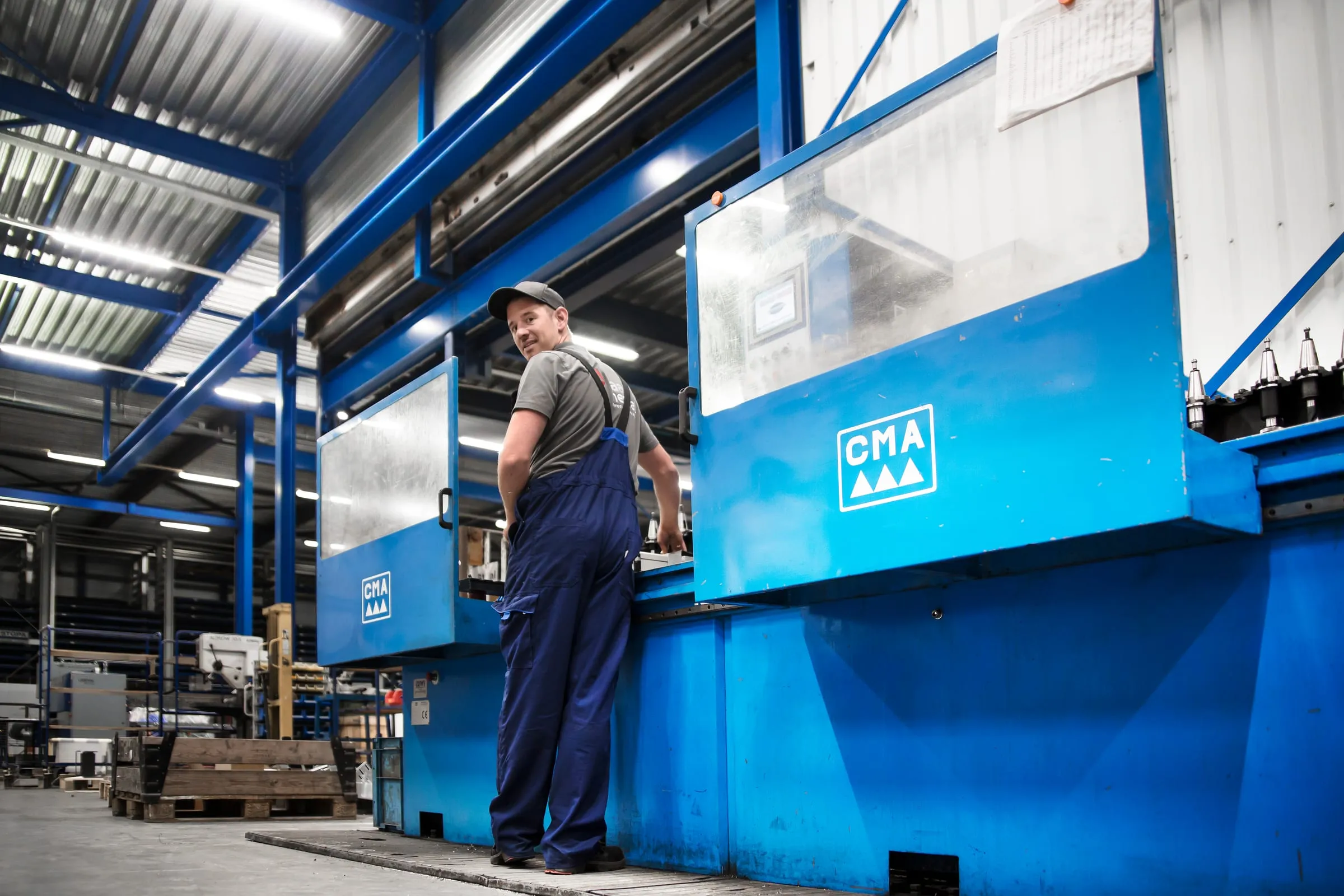
Different requirements, one process
A frame for the transport sector and a part for a food line come out of the same hall, but the requirements sit elsewhere: one on load and repeatability, the other on cleanability and surface. What changes is not the machine but the way we prepare the work.
For a request we need a drawing or 3D model, the material, the quantities and the requirements for surface and finish. The more complete that is, the sooner we can tell you what is possible. Requests go through the contact form; for laser cutting and bending they can also go through Plaatweb. Baas Metaal is ISO 9001 certified (certificates).
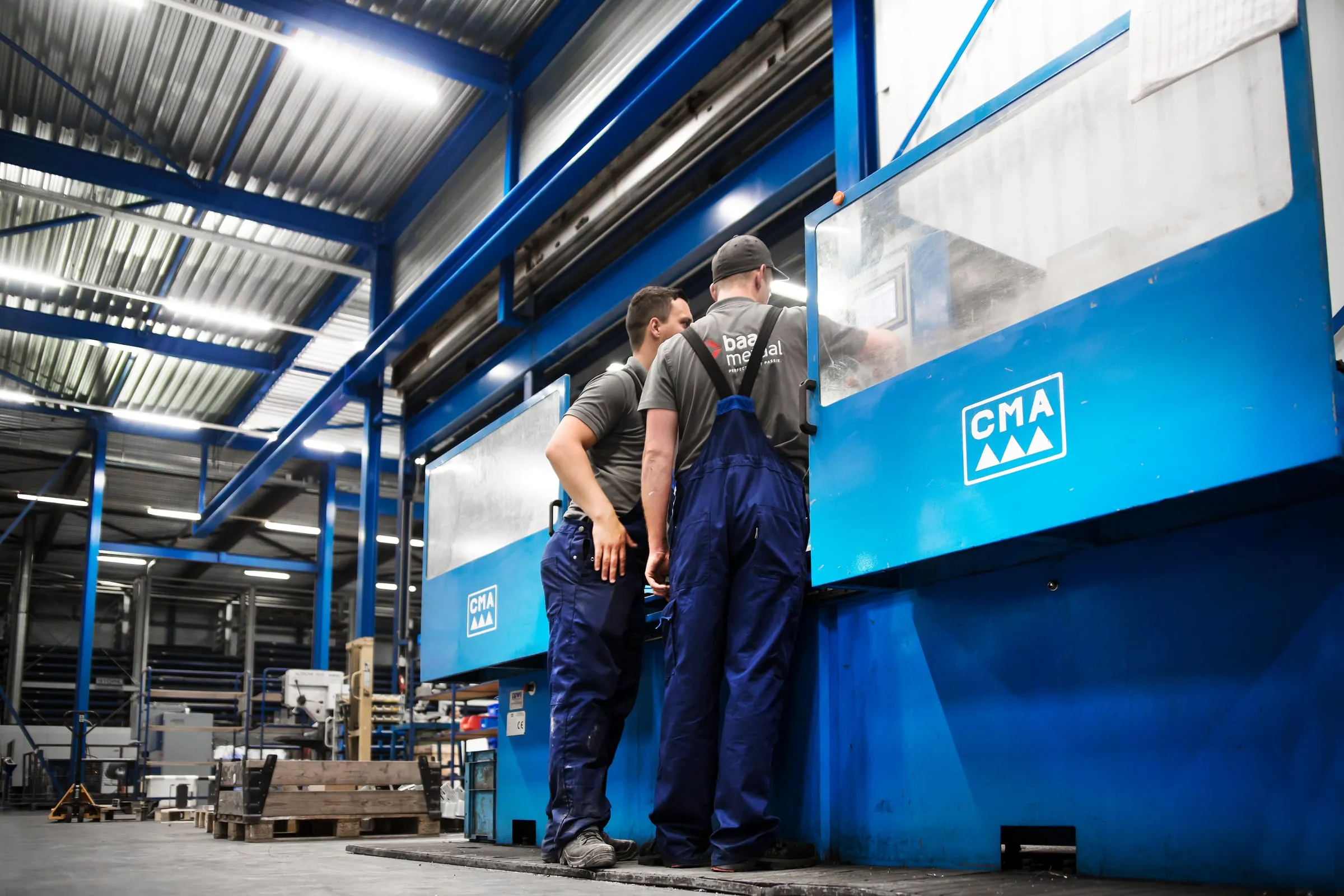
Sector 01
Machine and equipment building
Parts that have to fit into a larger whole, often in varying quantities and with drawings that still change during the build.
What counts most here is that the second and the twentieth part are the same as the first, and that a change to a drawing does not mean setting the process up again. Sheet metal, machining and welding all run through the same preparation with us, so a change only has to land in one place.
What matters
- Dimensions that are right in the assembly, not only per part.
- The same result at changing quantities: one-offs, small batches and repeat orders.
- A drawing change that reaches production quickly and without misunderstanding.
What we use for it
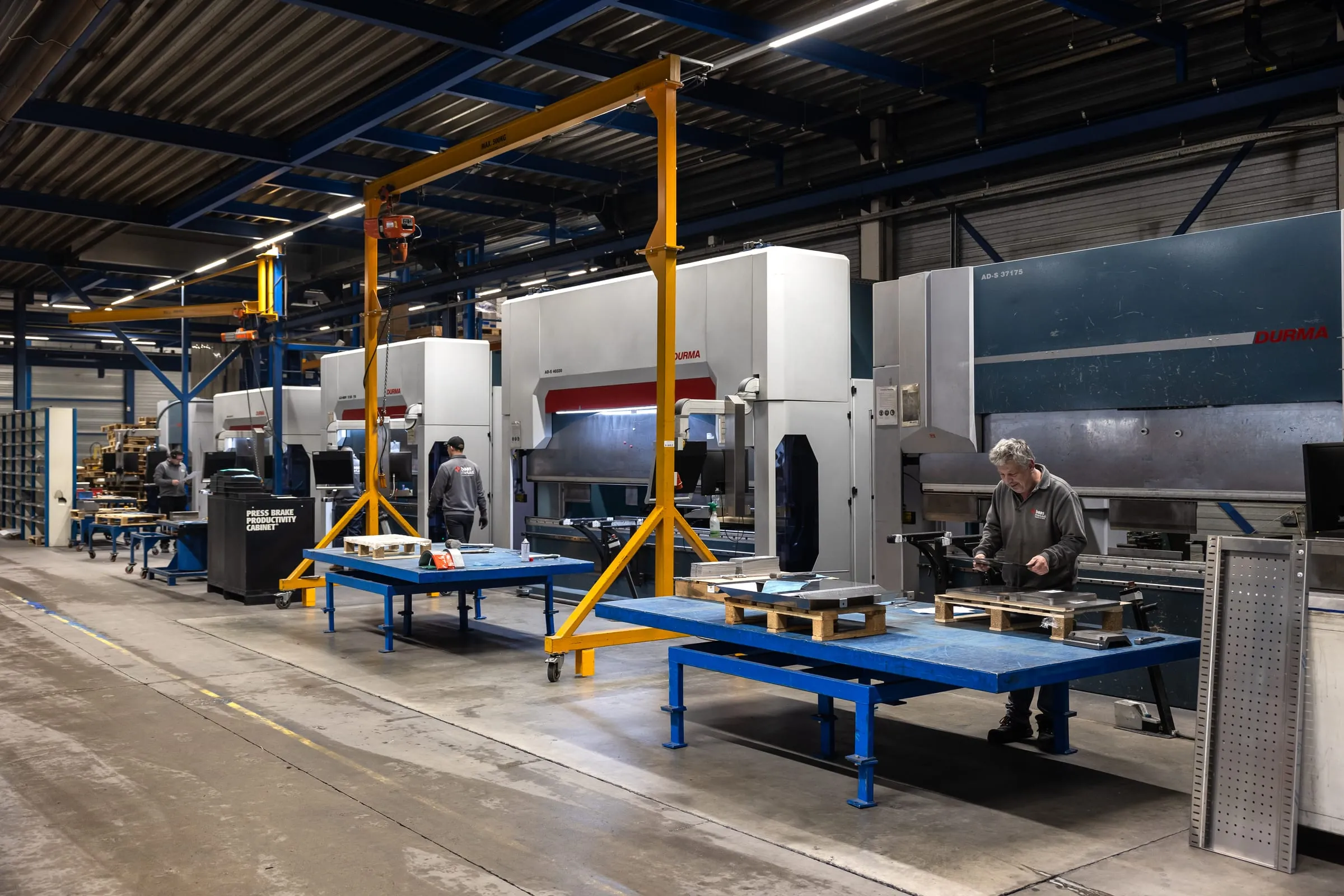
We cut sheet parts on three laser cutting machines, up to 30 mm in steel and stainless steel and up to 15 mm in aluminium. Bending is done on seven press brakes, up to a bending length of 4000 mm and a press force of 320 tonnes. Milling, turning, welding and glass bead blasting happen in the same hall, so an assembly does not travel back and forth between suppliers. The overview is on the machine park page.
If the design is not fixed yet, we look at manufacturability before anything is cut. See 3D engineering.
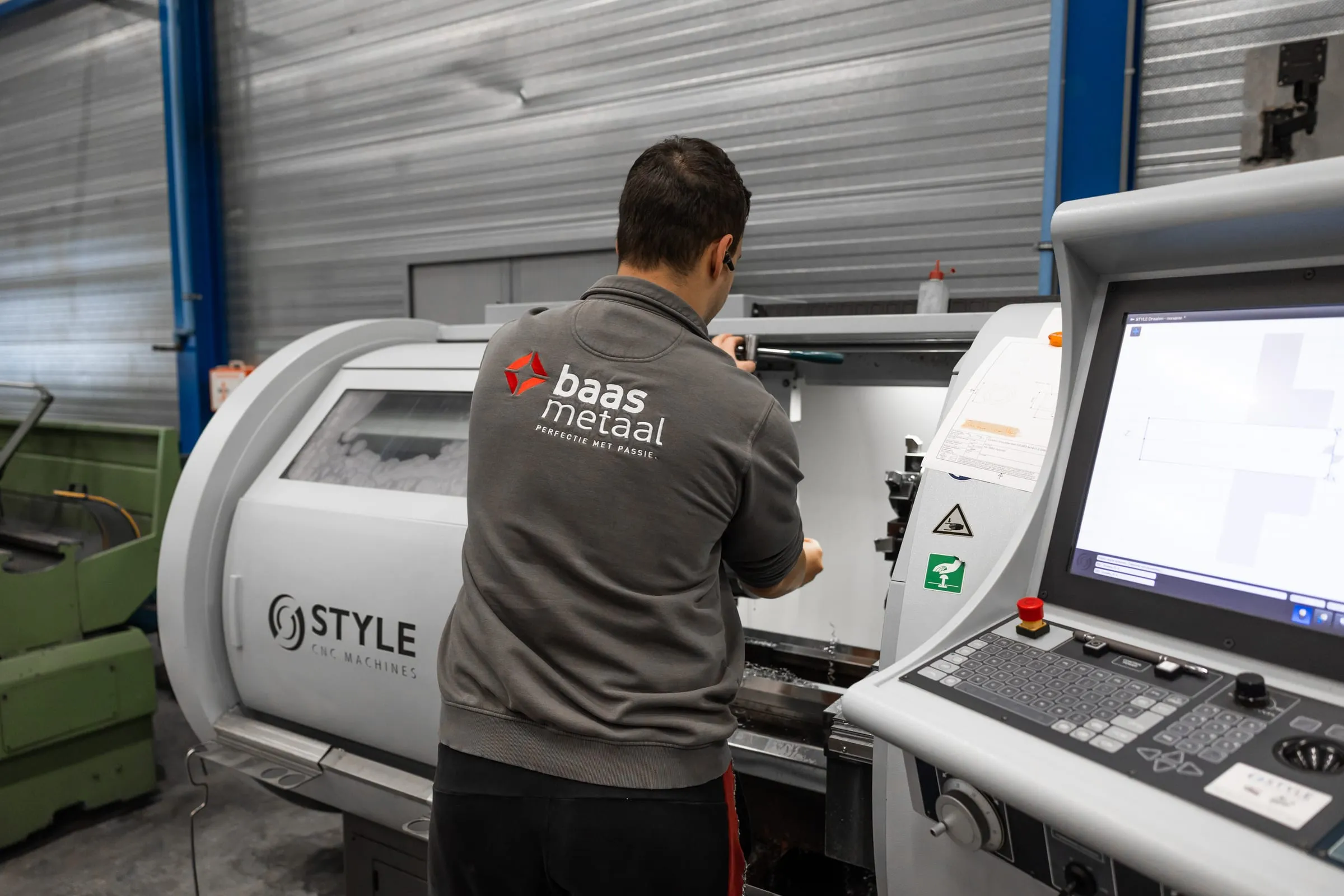
Sector 02
Transport and automotive
Structural parts that carry load and return in series, where the welding has to stay identical from one product to the next.
With repetition the weld is the critical factor: the same angle, the same speed, the same heat input. That is what robot welding is for. Whether it pays off depends on the series and on how often the same weld returns; we work that through with you before a jig is built.
What matters
- Welds that are the same from the first product to the last.
- Material that suits the load: structural steel, high-strength steel or wear-resistant steel.
- Holes and fixing points that are still in place after welding.
What we use for it
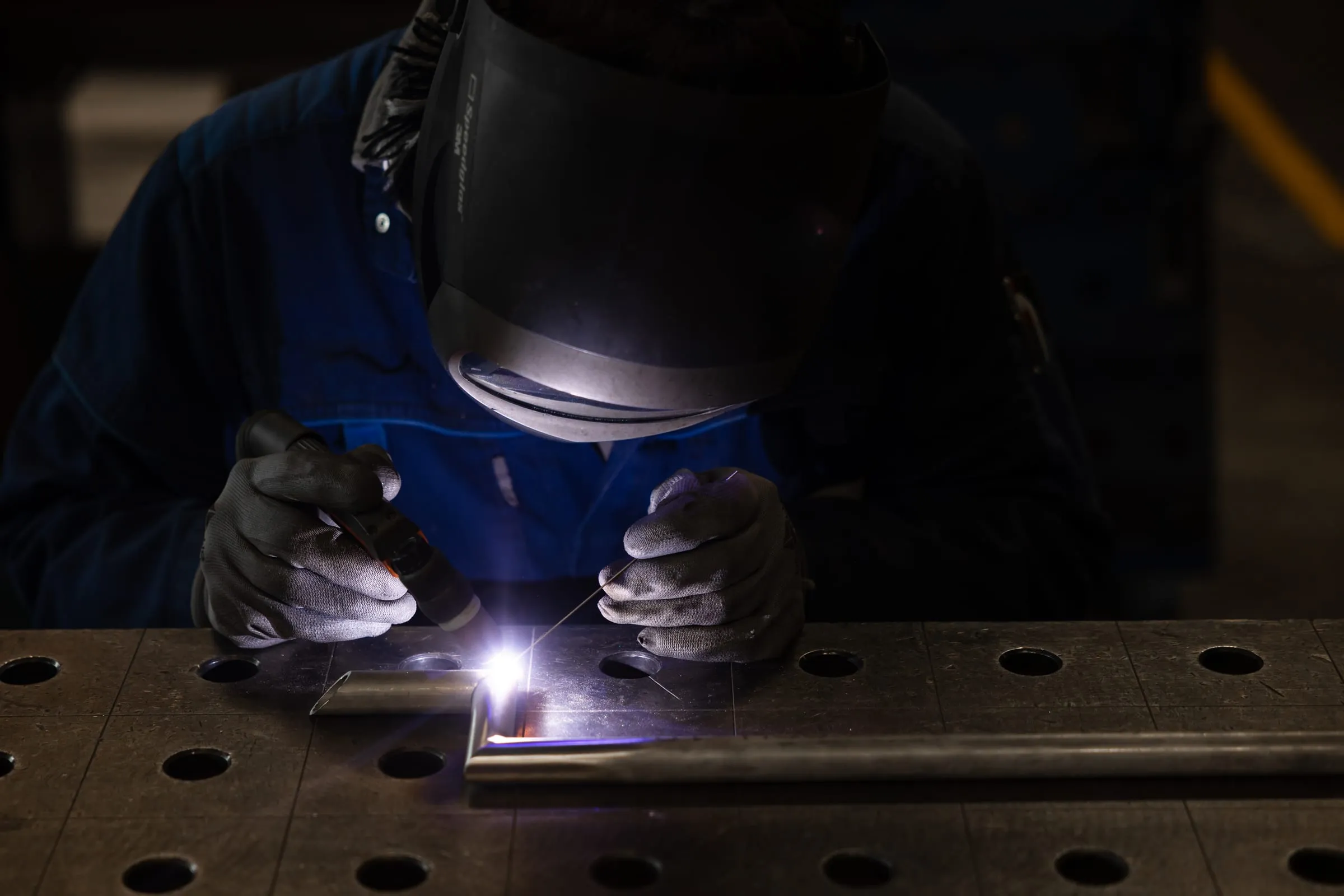
For welding in series there are two cobots. What is not suited to them we weld by hand in TIG, MIG or MAG, with welding qualifications from Lastechniek Oost for steel and stainless steel (TIG, MIG and MAG welding).
We laser cut high-strength steel such as S355MC and S700MC and wear-resistant steel (400 HB) up to 30 mm; the exact grades are listed under materials. Tube and section are cut on the tube laser at our sister company Assink & Schipholt, so holes and fits are already in place before welding (tube laser cutting).
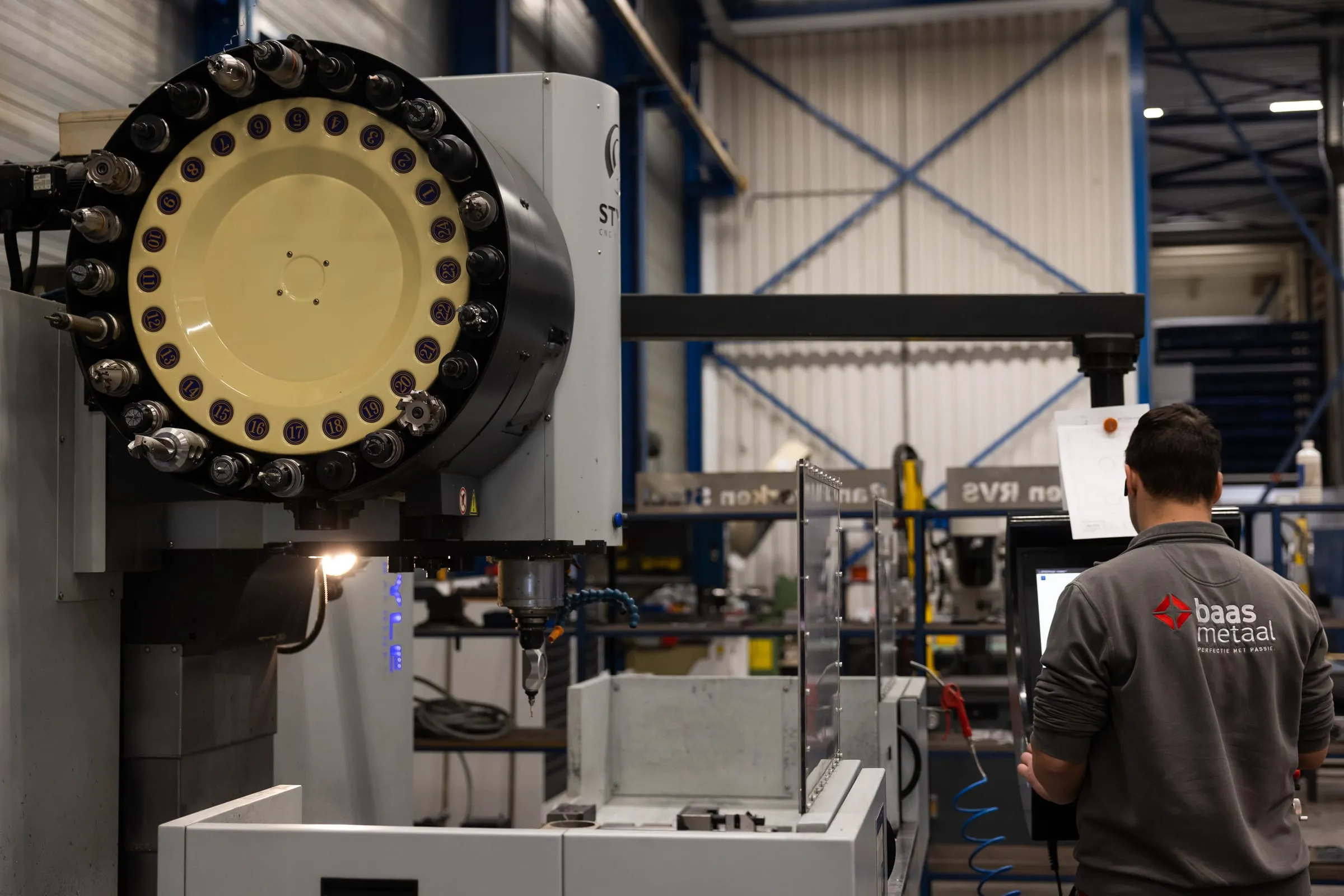
Sector 03
Mechatronics
Enclosures and frames in which components, cable looms and cooling all have to find their place, and where the fixing points have to be right to the millimetre.
The shape is rarely the problem here; the positions are. Holes, press-in fasteners and mating faces have to line up with each other, including after bending and welding. So during preparation we look at the order of operations: which hole before bending, which face after.
What matters
- Fixing points that are right relative to each other, also after bending and welding.
- Threads in thin sheet, without loose nuts that go missing during assembly.
- A cabinet or frame that goes together right the first time.
What we use for it
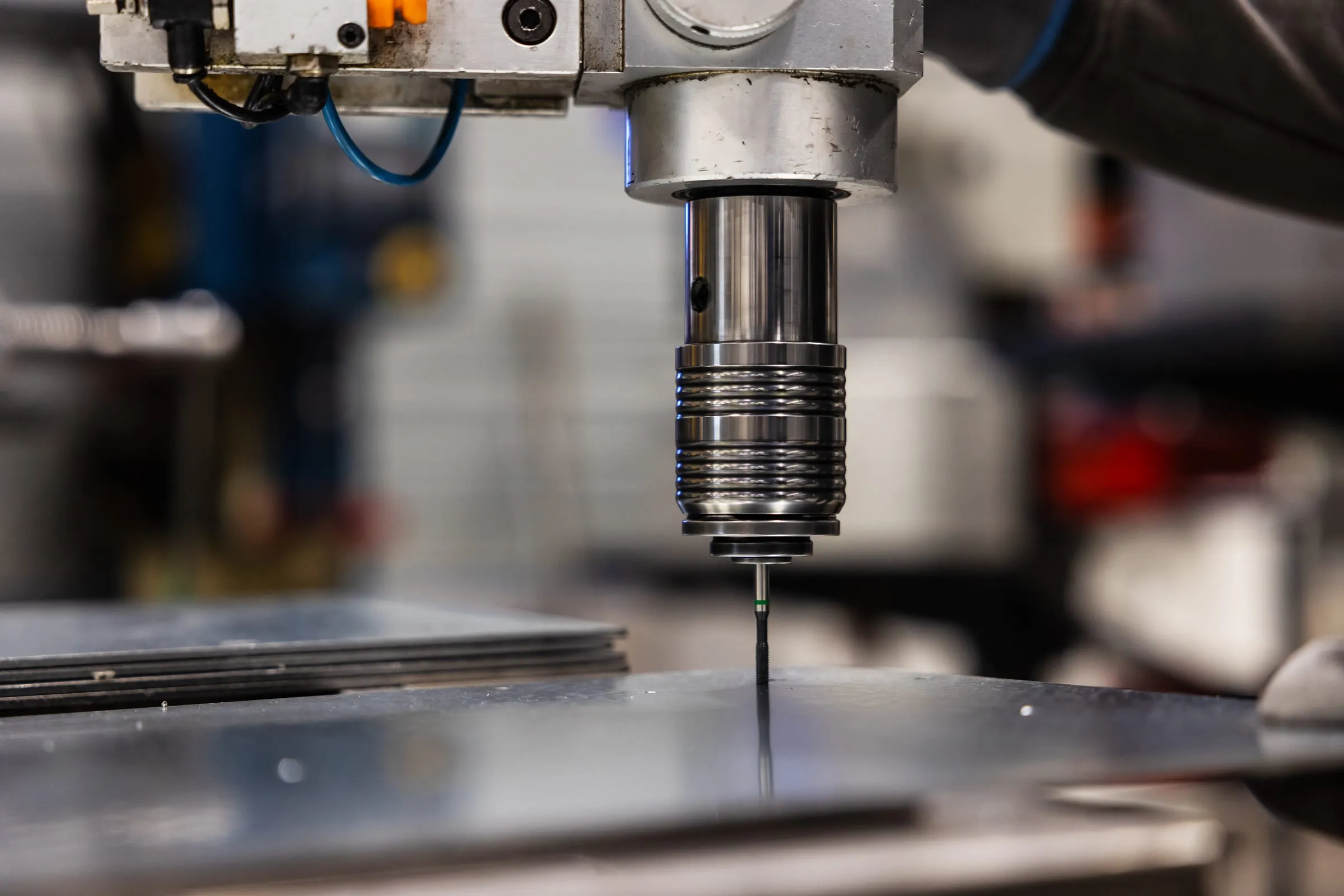
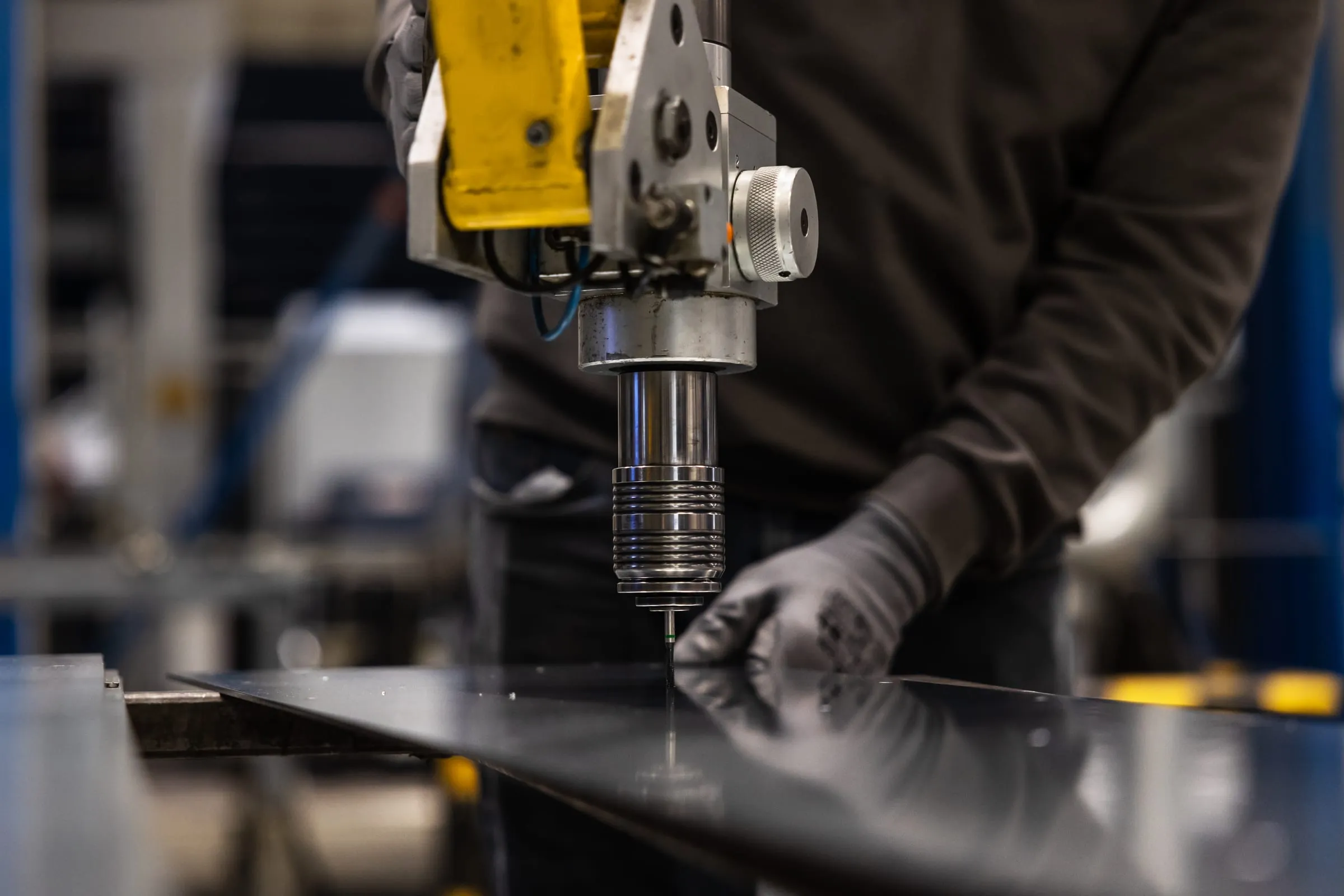
We press nuts, bolts and standoffs into the sheet, without welding (press-in). For threads in thin sheet or tube there is CNC flow drilling: the material forms a collar that takes the thread, without a separate part.
We cut sheet up to 15 mm in aluminium and up to 30 mm in steel and stainless steel; bending goes up to a length of 4000 mm. Powder coating is done by a regular partner, so a cabinet or frame can leave finished (other operations).
Sector 04
High-tech
Small quantities with demanding dimensions and finish, and with drawings that are often still developing.
For one-offs and small series the gain is not in machine time but in preparation: thinking through once, properly, how the part is held, in what order it is machined and where the datum sits. That is exactly the conversation we would rather have before the first cut.
What matters
- Reference faces and dimensions that are right the first time, also for a single part.
- A surface without burrs or weld discolouration.
- Room for drawings that still change, without every revision starting over.
What we use for it
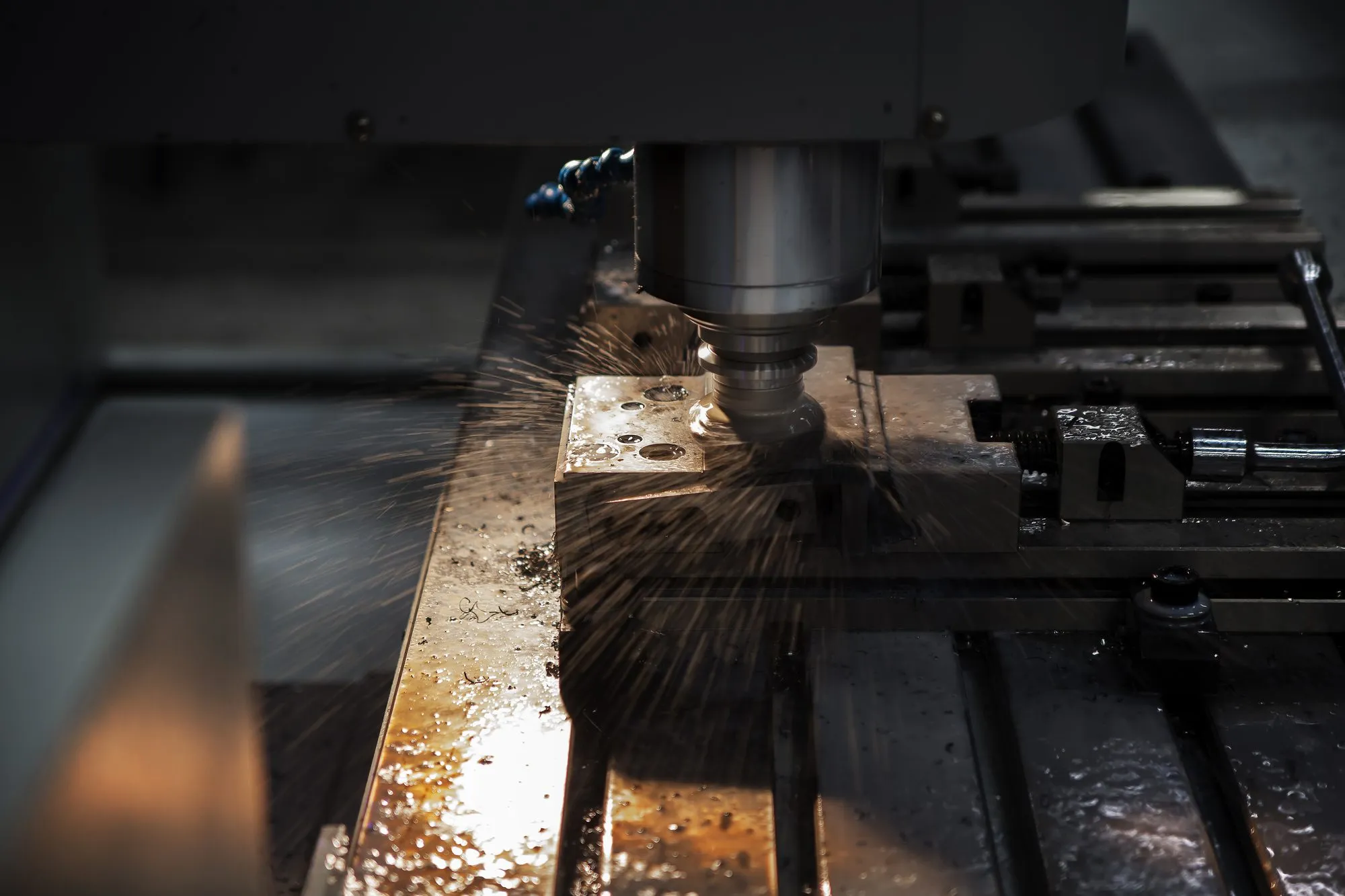
Machined work goes over the 3-axis CNC milling machine with a working range of 1500 × 650 × 600 mm, in steel, stainless steel, aluminium, brass and plastic (CNC milling). Sheet parts are laser cut and bent, and welded by hand in TIG, MIG or MAG. Glass bead blasting then gives the surface an even finish.
If you are still developing the product, we look at the design with you. See 3D engineering.
Sector 05
Medical
Parts that have to be cleanable: stainless steel, a surface without scale, and transitions where nothing gets left behind.
Cleanability is a design property, not a finishing step. Fully welded seams, radiused transitions and an even surface decide whether a part can be got clean. Glass bead blasting removes weld discolouration and evens out the surface; what else is needed depends on your requirements, which we record up front.
What matters
- The right stainless steel grade for the application and for the cleaning agents that come with it.
- Fully penetrated welds without crevices.
- A surface that is corrosion-resistant again after processing.
What we use for it
We laser cut grades including 1.4301 (304), 1.4307 (304L) and 1.4404 (316L); the full list is under laser cutting stainless steel. TIG welding of stainless steel is covered by the welding qualifications for material group 8. After welding, glass bead blasting also removes the oxide layer, so the stainless steel regains its corrosion resistance.
Baas Metaal is ISO 9001 certified (certificates). If your application has requirements beyond that, mention them with your request; we will check in advance what is feasible.
Sector 06
Food
Stainless steel, fully welded seams and a surface that can be cleaned and kept clean, in an environment that is washed down daily.
In food and beverage the detailing makes the difference: where a weld stops, how sharp an internal corner is, whether a section drains. Those are design choices that make cleaning easy or impossible later. We review them during preparation, and record the material choice and surface requirements up front.
Examples of what we make for the food industry: made-to-measure stainless steel worktables and racking, platform stairs, cooling tanks and stainless steel storage tanks. We know the food safety regulations, so the design is aligned with them from the start.
What matters
- No crevices, pores or sharp inside corners where dirt stays behind.
- Sections and surfaces that drain.
- Stainless steel that withstands the cleaning agents used on the line.
What we use for it
We laser cut stainless steel up to 30 mm, including 1.4301 (304) and 1.4404 (316L). 316L is often chosen where chloride is involved, such as salt or aggressive cleaning agents. We weld stainless steel in TIG, with welding qualifications for material group 8. After welding, glass bead blasting removes weld discolouration and the oxide layer, so the stainless steel is corrosion-resistant again.
Sector 07
Agriculture
Parts that live outdoors, have to cope with wear and weather, and must not fail in the middle of a season.
Here the heaviest requirement is not accuracy but service life and repairability. Material choice, thickness and the way a weld is loaded decide how long a part lasts. What you usually need is a part that fits and that makes it through another season; we are happy to have that conversation before anything is cut.
Examples of what we make for agriculture: parts for tractors and agricultural machinery, such as self-lubricating bearing bushes, and turned parts and shafts for injectors and fertiliser spreaders.
What matters
- Wear resistance where parts touch soil, manure or crop.
- Protection against weather and corrosion.
- Parts that can be remade quickly when something breaks during the season.
What we use for it
We laser cut sheet up to 30 mm, including wear-resistant steel (400 HB) and weathering COR-TEN. Bending goes up to 4000 mm and 320 tonnes; round work goes over the rolling machines. Shafts, bushes and other turned parts are made on the lathes (CNC turning). Powder coating is done by a regular partner.
If there is no drawing, an existing part can be the starting point. See 3D engineering.
Sector 08
Defence
Sheet metal parts, frames and machined components where drawing, material and records are fixed in advance and do not change along the way.
What matters most in this sector is that what was agreed is what gets delivered: the material from the specification, the dimensions on the drawing and the records the client asks for. That starts in work preparation. Before production, we fix which material, which sequence of operations and which checks belong to the part.
What matters
- Material and dimensions exactly to drawing and specification.
- Welds that hold under load and vibration.
- A repeat order that matches the first delivery.
What we use for it
We laser cut up to 30 mm in steel and stainless steel, including high-strength and wear-resistant steel such as S700MC and 400 HB, and bend up to 4000 mm bending length and 320 tonnes. Welding is done by hand in TIG, MIG or MAG, with welding qualifications from Lastechniek Oost, and in series on two cobots. Machined work goes over the 3-axis CNC milling machine with a working range of 1500 × 650 × 600 mm and over the lathes. The overview is on the machine park page.
Baas Metaal is ISO 9001 certified (certificates). If your order has requirements beyond that, for example for material certificates, documentation or confidentiality, mention them with your request; we will check in advance what is feasible.
Request
What we need to quote
If something is missing we will ask. If you are not sure yet yourself, we will look at it with you.
- material and thickness
- the quantities involved
- a drawing: DXF, STEP or a dimensioned PDF
- whether the part still needs finishing or assembly