
CNC milling aluminium
Aluminium machines quickly, but it is soft and expands with heat. That shifts the attention from cutting force to clamping and chip removal.
What makes aluminium different
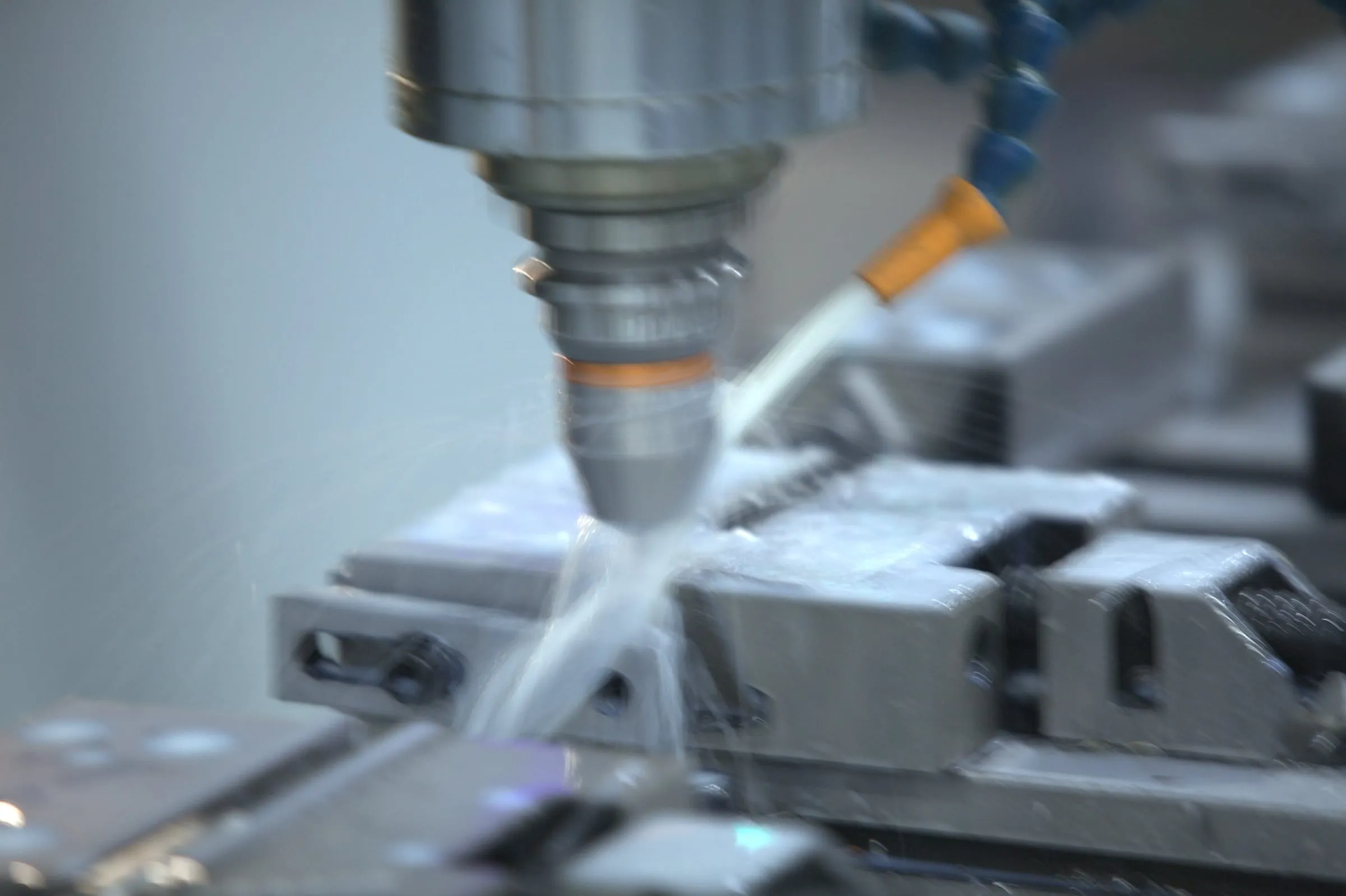
Aluminium is soft and tough at the same time. It comes away quickly, but the chip tends to stick to the tool, and the heat released ends up in the workpiece before it has left it. Both are manageable, and both determine how we clamp the part and in which order we machine it.
Where it shows up in the dimensions
Two things cost accuracy here. Clamping force: a thin-walled part distorts as soon as it is held too firmly, and springs back as soon as it is released. And heat: aluminium expands more than steel, so a dimension that is right when warm is no longer right when cold. That is why we look at the wall thickness and at which dimensions are truly critical beforehand, rather than correcting afterwards.
What determines the finish
The surface that comes off the cutter is usually already clean with aluminium, but it is also vulnerable: scratches and handling marks show. If it is visible work, please say so, and we will take that into account in clamping and transport.
What we need from you
The alloy, the dimensions of the stock material, the quantities and which dimensions are critical. The alloy really matters: not every aluminium alloy machines the same, and not every alloy bends or welds equally well afterwards.
What we mill with
There is one 3-axis CNC milling machine with a working area of 1500 × 650 × 600 mm. Within that we mill steel, stainless steel, aluminium, brass and plastic, as single pieces and in series.
Frequently asked questions
What affects the dimensional accuracy when milling aluminium?
Two things cost accuracy: clamping force and heat. A thin-walled part distorts when held too firmly and springs back when released. Aluminium expands more than steel, so a dimension that is right when warm is no longer right when cold. That is why we look at the wall thickness and the critical dimensions beforehand.
What should I consider if the aluminium part is visible work?
The surface that comes off the cutter is usually already clean with aluminium, but it is also vulnerable: scratches and handling marks show. If it is visible work, please say so, and we will take that into account in clamping and transport.
What information do I need to supply for milling aluminium?
We need the alloy, the dimensions of the stock material, the quantities and which dimensions are critical. The alloy really matters: not every aluminium alloy machines the same, and not every alloy bends or welds equally well afterwards.