
CNC milling brass
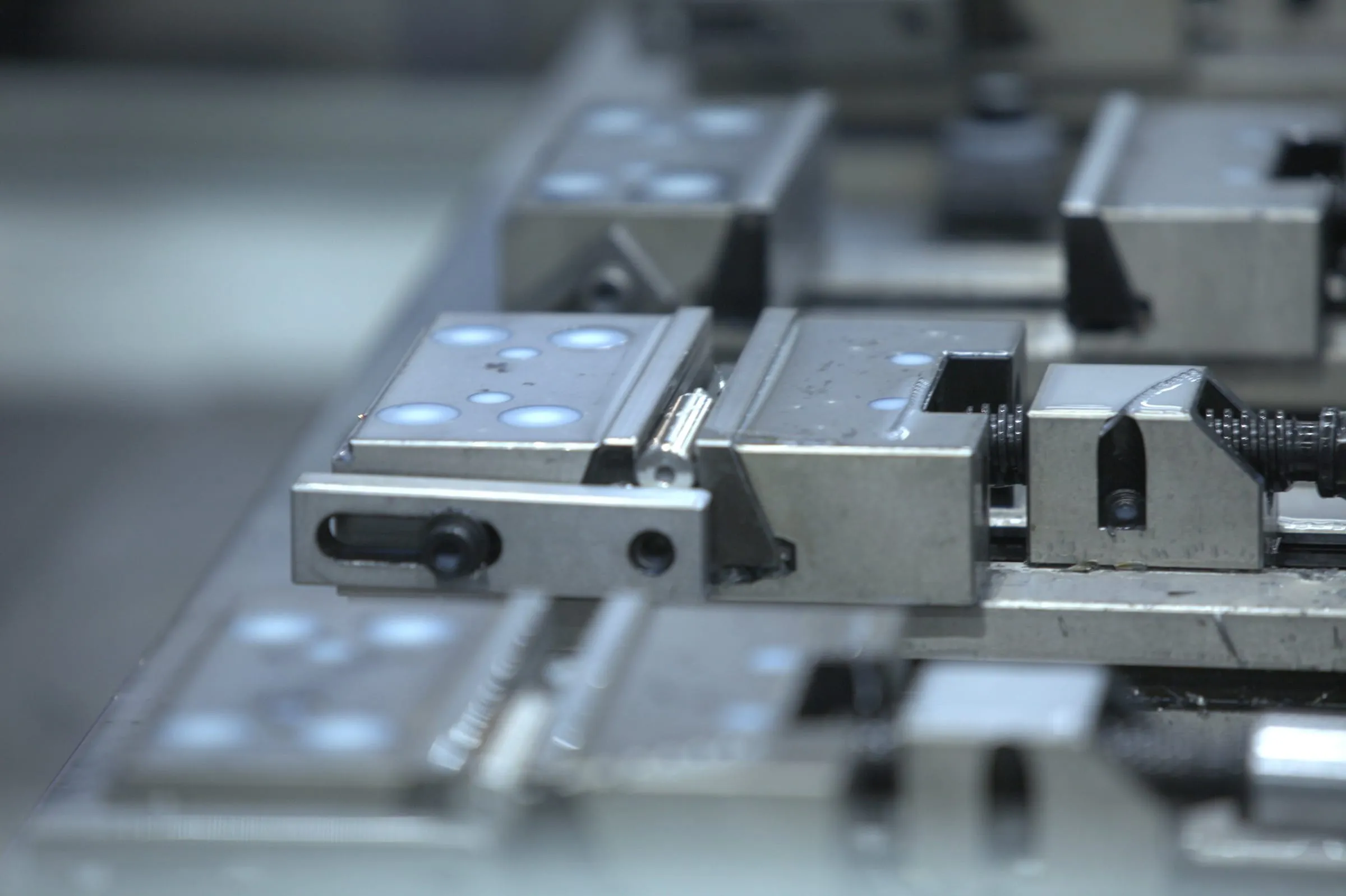
Brass machines easily and leaves a clean edge. The attention therefore shifts from cutting to clamping and to protecting the surface.
What makes brass different
Of the three, brass is the easiest to machine: the chip breaks short, the edge comes off the tool clean and little burr remains. That makes it suitable for parts where the dimension and the edge have to be right straight away, without any further finishing.
Where the attention goes instead
When cutting itself is not a problem, the attention shifts to two other things. The material is heavier and softer than it looks, so a thin-walled part distorts under clamping force just as aluminium does. And the surface is sensitive: fingerprints and clamping marks stay visible, especially if the part remains visible in the end product.
What we need from you
The brass grade, the dimensions of the stock material, the quantities and whether the part remains visible. The last one determines how we hold it and how it leaves the building.
What we mill with
There is one 3-axis CNC milling machine with a working area of 1500 × 650 × 600 mm. Within that we mill steel, stainless steel, aluminium, brass and plastic, as single pieces and in series.
Frequently asked questions
Why is brass suitable for parts without further finishing?
Brass machines easily: the chip breaks short, the edge comes off the tool clean and little burr remains. That makes it suitable for parts where the dimension and the edge have to be right straight away, without any further finishing.
What needs attention when milling brass?
When cutting itself is not a problem, the attention shifts to clamping and the surface. Brass is heavier and softer than it looks, so a thin-walled part distorts under clamping force just as aluminium does. And fingerprints and clamping marks stay visible, especially if the part remains visible in the end product.
What information do I need to supply for milling brass?
We need the brass grade, the dimensions of the stock material, the quantities and whether the part remains visible. The surface is sensitive: fingerprints and clamping marks stay visible. Whether the part remains visible therefore determines how we hold it and how it leaves the building.