
CNC milling steel
Steel needs more force and more rigidity than aluminium. That moves the attention to clamping, tool wear and the order of operations.
What makes steel different
Steel offers more resistance than aluminium. The cutting force is higher, the tool wears faster, and that happens gradually: a cutter at the end of a series no longer cuts exactly as it did at the start. In series work that is a point for the dimensions, not only for the costs.
Where it shows up in the dimensions
Because the forces are higher, the rigidity of the whole chain counts: workpiece, clamping and tool together. A part that gives way under the cutter comes back with a dimension that was right on paper. That is why we decide the clamping and the feed direction before any material is removed.
Stresses in the material
Steel carries internal stresses from rolling, cutting and welding. As soon as material is removed, the workpiece looks for a new balance and can distort. For parts that are first welded and then milled, we therefore look at the sequence: which face before and which face after welding.
What we need from you
The steel grade, the dimensions of the stock material, the quantities and which dimensions are critical. If the part was cut or welded earlier, please tell us: that often determines more about the sequence than the drawing itself.
What we mill with
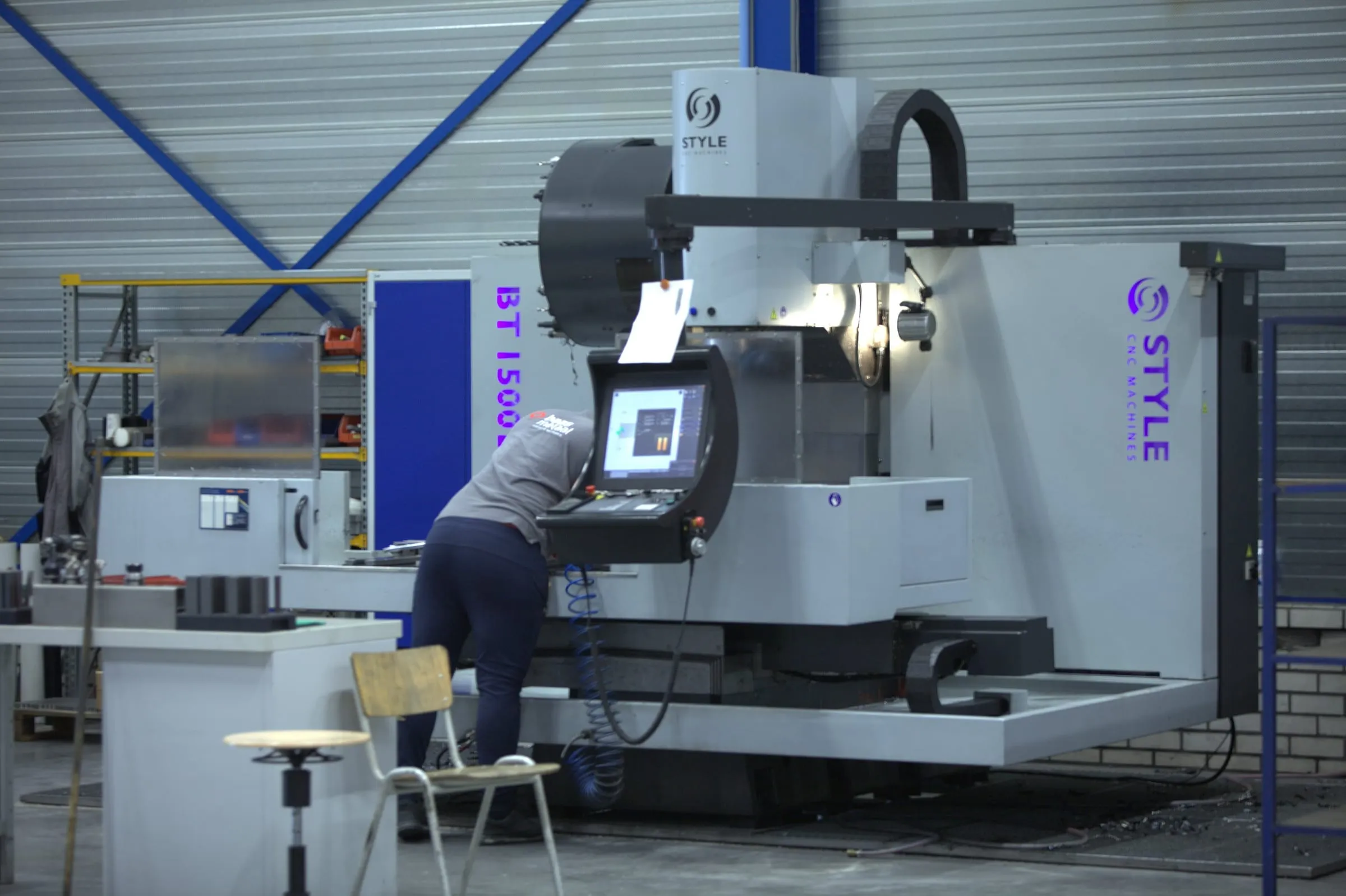
There is one 3-axis CNC milling machine with a working area of 1500 × 650 × 600 mm. Within that we mill steel, stainless steel, aluminium, brass and plastic, as single pieces and in series.
Frequently asked questions
How does tool wear affect milling steel in series?
Steel offers more resistance than aluminium. The cutting force is higher and the tool wears faster, and that happens gradually: a cutter at the end of a series no longer cuts exactly as it did at the start. In series work that is a point for the dimensions, not only for the costs.
Can a steel part distort during milling?
Yes. Steel carries internal stresses from rolling, cutting and welding. As soon as material is removed, the workpiece looks for a new balance and can distort. For parts that are first welded and then milled, we therefore look at the sequence: which face before and which face after welding.
What information do I need to supply for milling steel?
The steel grade, the dimensions of the stock material, the quantities and which dimensions are critical. If the part was cut or welded earlier, please tell us: that often determines more about the sequence of operations than the drawing itself.